All posts by AI REV LABS

HALAL& TAYYIB

حَلَالًا طَيِّبًا — Are They One Term or Two Distinct Concepts?
This is a beautiful and important question in Quranic semantics and fiqh. Scholars have indeed differentiated between the two terms, treating them as carrying distinct meanings that together form a comprehensive standard. Here is the scholarly consensus and debate:

The Key Verses
The pairing appears in several places, most notably:
∙ Al-Baqarah 2:168 — “Yā ayyuha’n-nāsu kulū mimmā fi’l-arḍi ḥalālan ṭayyiban”
∙ Al-Māʾidah 5:88 — “Wa kulū mimmā razaqakumu’llāhu ḥalālan ṭayyiban”
∙ Al-Anfāl 8:69 — “Fa kulū mimmā ghanimtum ḥalālan ṭayyiban”
∙ Al-Naḥl 16:114 — “Fa kulū mimmā razaqakumu’llāhu ḥalālan ṭayyiban”

Scholarly Differentiation

  1. Al-Ṭabarī (d. 310 AH)
    He treats ḥalāl as the legal category — that which Sharīʿah has permitted — and ṭayyib as the qualitative condition — that which is wholesome, pure, and free from harm. He reads them as two distinct filters, both of which must be satisfied simultaneously.
  2. Al-Rāzī (Fakhr al-Dīn, d. 606 AH)
    In his Mafātīḥ al-Ghayb, he makes a particularly sharp distinction:
    ∙ Ḥalāl = legally permissible (ibāḥah sharʿiyyah) — determined by the Lawgiver
    ∙ Ṭayyib = naturally pure, agreeable, and beneficial — determined by reason, nature, and human constitution (fiṭrah)
    He argues that something can be ḥalāl in principle yet not ṭayyib in a particular circumstance (e.g., lawful food consumed in a harmful quantity or condition), and vice versa — something might seem ṭayyib to the senses yet remain ḥarām by divine ruling.
  3. Ibn Kathīr (d. 774 AH)
    He connects ṭayyib to the concept of purity from filth and harm — it excludes what is spiritually impure (khabīth) even if legally permissible in certain schools. He notes the contrast with khabīth (خَبِيث) used elsewhere in the Quran, making ṭayyib its direct opposite: pure, wholesome, and agreeable to sound human nature.
  4. Mawdūdī (d. 1979)
    In Tafheem ul-Qurʾān, he explains the pairing as addressing two different dimensions of food ethics:
    ∙ Ḥalāl addresses the source and legal status
    ∙ Ṭayyib addresses the intrinsic quality, cleanliness, and wholesomeness
    He emphasizes that Islam does not merely ask “is it permitted?” but also “is it genuinely good for you?” — making ṭayyib an ethical and health-oriented criterion alongside the legal one.
  5. Sayyid Quṭb (d. 1966)
    In Fī Ẓilāl al-Qurʾān, he takes a more holistic view — that the two terms together represent the complete Islamic standard for consumption, with ḥalāl being the negative boundary (what is not forbidden) and ṭayyib being the positive quality (what is actively good and pure). Neither alone is sufficient.

The Conceptual Distinction — Summaryحَلَال (Ḥalāl)طَيِّب (Ṭayyib)Domain Legal / Sharīʿah Qualitative / Natural Determined by Divine legislation Fiṭrah, reason, benefit Question asked Is it permitted? Is it pure and wholesome? Opposite Ḥarām (حرام) Khabīth (خبيث) Scope Source & acquisition Nature & condition

Why Both Are Needed Together
The scholars’ consensus is that the conjunction of both terms establishes a dual standard that Islam uniquely requires. One without the other is incomplete:
∙ Ḥalāl without ṭayyib = legally permitted but potentially harmful or impure
∙ Ṭayyib without ḥalāl = pleasant or wholesome but acquired through forbidden means (e.g., stolen food)
This is why the Quran pairs them consistently — they are complementary, not synonymous. Together they reflect Islam’s integration of legal righteousness with natural goodness, which is a hallmark of the Quranic worldview.

Would you like me to look at how classical uṣūl al-fiqh scholars applied this distinction in rulings on food, earnings, or medicine? Or explore the ṭayyib/khabīth contrast across the Quran?

Halal , haram issues

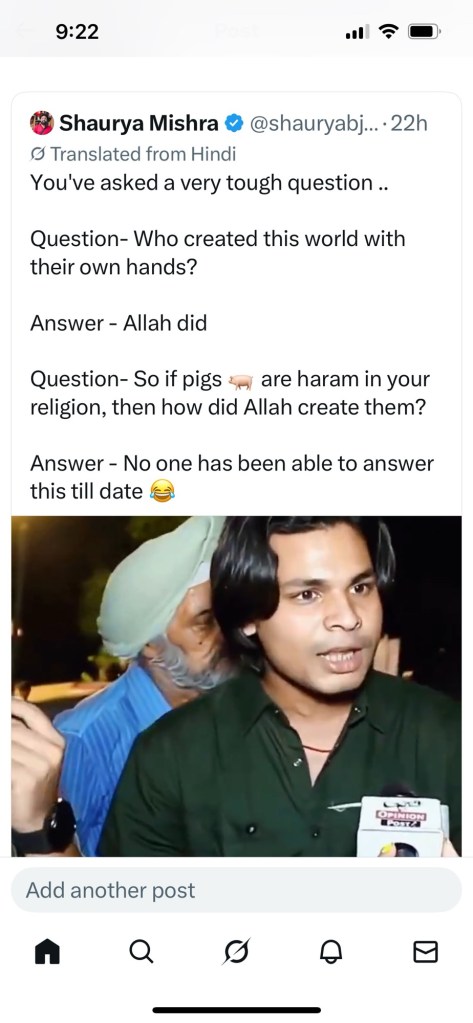
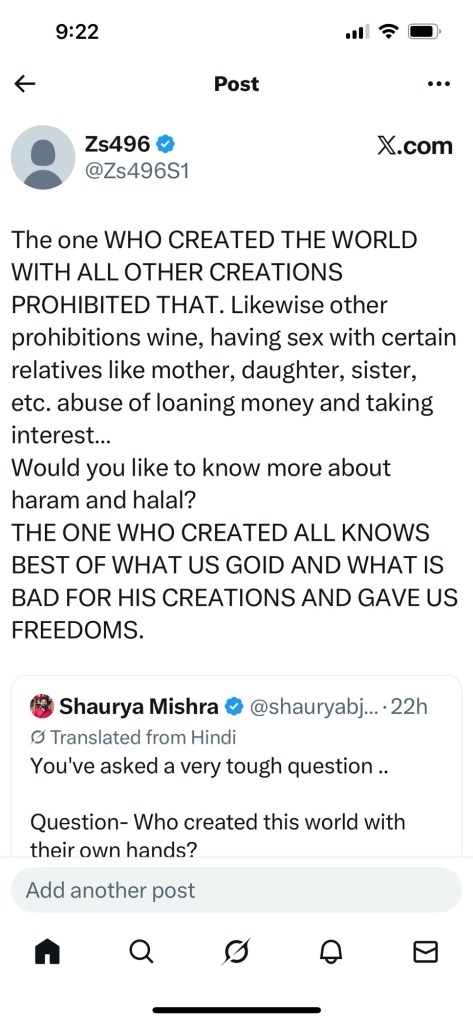
  • This X post quotes a viral Hindi video mocking Islam by posing a riddle about why Allah created pigs if they are haram, featuring street interviews with non-Muslims highlighting perceived inconsistencies in dietary laws.
  • The author defends Islamic prohibitions, arguing that the creator deems certain creations—like pork, alcohol, incest, and usury—harmful for humans, emphasizing divine wisdom in granting freedoms while guiding toward beneficial choices.
  • Islamic scholarship, including Qur’anic verses (e.g., Surah Al-Baqarah 2:173), explicitly deems pork impure and forbidden, with studies like those in the Journal of Animal Science noting health risks such as high cholesterol, parasites, and toxins in pork to support the rationale.

Definitions of Halal and Haram

In Islam, halal (حلال) is an Arabic term meaning “permissible” or “lawful.” It refers to actions, behaviors, foods, or things that are allowed according to Islamic law (Sharia), as derived from the Quran and the Sunnah (teachings and practices of the Prophet Muhammad, peace be upon him). Performing halal acts can bring reward if done with the intention of obeying Allah, but there is no sin in abstaining from them unless they are obligatory. 10 Conversely, haram (حرام) means “forbidden” or “unlawful.” It denotes actions or things strictly prohibited by Allah, where engaging in them may incur sin, punishment in the hereafter, and potentially legal penalties in this life under Islamic governance. Abstaining from haram acts out of obedience to Allah earns reward. 10

These concepts are central to Muslim life, guiding daily decisions in areas like diet, finance, social interactions, and worship. The determination of halal and haram is exclusively Allah’s prerogative—no human, ruler, or scholar can alter it without basis in divine revelation. 10 The Quran emphasizes this in verses like Surah al-An’am (6:153), which calls for following Allah’s straight path without deviation, and Surah al-Shura (42:21), condemning those who invent unauthorized religious rules. 10

Core Principles Governing Halal and Haram

Islamic jurisprudence (fiqh) outlines several foundational principles for distinguishing halal from haram, ensuring the religion promotes ease, mercy, and benefit for humanity. 11

  1. Default Permissibility: Everything in creation is halal by default unless explicitly forbidden by the Quran or authentic Sunnah. This principle stems from Allah’s mercy, as the Quran states: “And He has subjected to you what is in the Heavens and what is in the Earth, all together from Him” (45:13). The Prophet Muhammad (peace be upon him) reinforced this by saying the lawful is what Allah has made lawful in His Book, the unlawful is what He has forbidden, and what is unmentioned is a mercy to be accepted. 11 Thus, the scope of haram is relatively narrow compared to halal.
  2. Exclusive Divine Legislation: Only Allah can declare something halal or haram. Humans, including scholars, interpret and clarify based on revelation but cannot invent prohibitions or permissions. Forbidding what Allah has permitted or vice versa is akin to shirk (associating partners with Allah), as criticized in the Quran (e.g., 42:21 and 9:31 regarding rabbis and monks who overstepped). 11
  3. Association with Benefit and Harm: Haram is tied to things that are inherently harmful or bad for individuals and society, while halal promotes what is good and beneficial. Allah, in His wisdom and mercy, forbids detrimental elements (e.g., Quran 2:219 on wine and gambling, where sin exceeds benefit) and permits wholesome alternatives. Prohibitions on the Jewish people were sometimes punitive (4:160), but Islam eases such burdens (7:157). 11
  4. Alternatives Provided: For every haram item or action, Islam offers superior halal substitutes. For instance, usury (riba) is forbidden, but ethical trade and business are encouraged; adultery is haram, but marriage is promoted. 11
  5. Paths to Haram Are Also Forbidden: Anything that leads to haram is itself haram, such as provocative media or unrestricted mixing of genders that could lead to adultery. All participants in haram acts share responsibility (e.g., producers, sellers, and consumers of alcohol). 11
  6. No Justification Through Intentions or Tricks: Good intentions do not make haram means permissible—both ends and methods must be halal. Renaming or using loopholes to bypass prohibitions (e.g., disguising usury as a “service fee”) is invalid. The Prophet warned against such practices, likening them to the Jews’ evasions. 11
  7. Avoidance of Doubtful Matters (Mushtabahat): Matters unclear between halal and haram should be avoided to safeguard one’s faith, as per the hadith: “What is halal is clear and what is haram is clear. Midway between them are things which many people do not know… He who approaches them will be very near to haram.” 11
  8. Universal Application: Haram applies equally to all Muslims, regardless of status—no exemptions for rulers or the elite. For example, theft warrants punishment even if committed by the Prophet’s daughter Fatima (hypothetically). 11
  9. Necessity as an Exception: In extreme duress (e.g., starvation), haram may be temporarily permitted in minimal amounts, without desire or excess, as the Quran allows (2:173). This reflects Islam’s emphasis on ease: “Allah desires ease for you, and desires not hardship for you” (2:185). 11

Levels of Halal and Haram

Islamic rulings extend beyond a simple halal-haram binary, encompassing nuanced categories in fiqh to guide behavior with precision. 9 These are often divided into four levels for halal (permissible spectrum) and two for haram (forbidden degrees), helping Muslims prioritize actions for spiritual growth.

Four Levels of Halal

  1. Fard (Obligatory/Compulsory): Actions commanded by Allah, where neglecting them incurs sin, but fulfilling them earns reward. Examples: Performing the five daily prayers (salah), fasting during Ramadan, paying zakat (charity), and undertaking Hajj if financially able. These are backed by direct Quranic commands or hadiths warning of punishment for omission. 9
  2. Mustahab (Recommended/Encouraged): Acts the Prophet consistently did or encouraged, bringing reward if performed but no sin if omitted. Examples: Extra (Sunnah) prayers, reciting “Bismillah” before eating, visiting the sick, and voluntary fasting on Mondays/Thursdays. These build upon fard acts and foster hypocrisy if abandoned while claiming devotion to Allah. 9
  3. Mubah (Neutral/Permissible): Actions neither rewarded nor punished, allowing personal choice. Examples: Choosing clothing styles (within modesty rules), eating at a table versus on the floor, or pursuing hobbies. Issues arise when cultural biases elevate these to obligatory or forbidden status without evidence. 9
  4. Makruh (Disliked/Detestable): Actions discouraged but not sinful unless habitual or intentional. Avoiding them earns reward. Examples: Eating garlic before mosque attendance (due to odor), praying while suppressing the urge to use the restroom, or wasting water in ablution (wudu). If repeated excessively, they may border on haram. 9

Two Levels of Haram

  1. Major Sins (Kabair): Severe prohibitions with grave consequences, often including prescribed punishments. Examples: Shirk (polytheism), murder, theft, usury (riba), and adultery/fornication (zina). Repentance requires sincere remorse, increased worship, and restitution (e.g., returning stolen items). 9
  2. Minor Sins (Sagha’ir): Lesser wrongs forgivable through good deeds, prayer, ablution, or supplications. However, persistence without repentance can escalate them to major sins, especially if done proudly. Examples include minor gossip or impatience, which can be erased by acts like saying “Subhanallah.” 9

Examples Across Different Aspects of Life

  • Food and Drink: Halal includes wholesome, permissible items like fruits, vegetables, and properly slaughtered meat (e.g., Quran 5:4 on good food). Haram encompasses pork, blood, carrion, and intoxicants like alcohol (Quran 5:90-91). Alternatives: Healthy beverages instead of wine. Urinating in public spaces or shade is haram due to health risks. 11
  • Finance and Business: Halal involves ethical trade, profit-sharing, and charity. Haram includes riba (interest-based loans), gambling, and fraud. Substitutes: Interest-free financing or contests with prizes. 11
  • Actions and Behavior: Halal actions promote justice, like honesty and kindness. Haram includes theft (universal punishment), adultery, and its precursors (e.g., immodest dress or explicit media). Marriage is the halal alternative to illicit relations. 11
  • Daily Life and Worship: Halal worship follows prescribed methods; inventing rituals is haram (e.g., unauthorized taboos on animals, Quran 5:104). Borderline matters like excessive socializing should be avoided to prevent sin. 11

In essence, halal and haram form a balanced framework for a righteous life, emphasizing mercy, accountability, and human well-being while drawing Muslims closer to Allah.

HALAL & HARAM , standard approach

https://claude.ai/share/86f4e0e2-1b22-4cf8-ba26-7d2c4030ba66

Here’s a comprehensive lecture outline on Permissions and Prohibitions in Islam:

Part 1: The Standard Approach (Al-Halal wal-Haram)

  1. The Foundational Principle: Everything is Permitted Unless Prohibited
    The baseline rule in Islamic jurisprudence (fiqh) is:
    “The default ruling on all things is permissibility (ibāḥa) unless there is a specific text prohibiting it.”
    — A foundational maxim of Islamic legal theory (usul al-fiqh)
    This means scholars do not need to “prove” something is halal — the burden of proof lies on establishing prohibition.
  2. The Five Essential Categories (Al-Ahkam al-Khamsah)
    All human actions in Islam fall under five rulings:

Arabic Term Meaning Example Wajib / Fard Obligatory Daily prayers, Zakat Mustahabb / Mandub Recommended Sunnah prayers, charity Mubah Permissible (neutral) Trade, eating most foods Makruh Disliked but not forbidden Wasteful use of water in wudu Haram Forbidden Alcohol, riba, murder

  1. Principles Governing Prohibition
    Classical scholars identified clear criteria for what makes something haram:
    a) Explicit Quranic or Hadith text
    Prohibition must be grounded in clear evidence (nass). Scholars cannot invent prohibitions.
    b) The Six Protected Necessities (Al-Daruriyyat al-Sitt)
    Islam prohibits what threatens:
    ∙ Life (al-nafs)
    ∙ Intellect (al-aql)
    ∙ Lineage/family (al-nasl)
    ∙ Property (al-mal)
    ∙ Religion (al-din)
    ∙ Honor (al-ird) — added by many scholars
    c) Hardship brings ease (al-mashaqqah tajlib al-taysir)
    When genuine necessity arises, prohibitions may be temporarily lifted — e.g., eating haram food to avoid starvation.
    d) Blocking means to harm (Sadd al-Dhara’i)
    Even permissible things become forbidden if they are clear pathways to the haram.
  2. The Role of Scholars
    ∙ Scholars derive rulings through ijtihad (scholarly reasoning) when texts are silent
    ∙ The principle of istishab (presumption of continuity) means permissibility is assumed until proven otherwise
    ∙ Fatwa is not personal opinion — it must be grounded in Quran, Sunnah, ijma’ (consensus), and qiyas (analogy)

Part 2: Quranic Warnings Against Crossing the Limits
The Quran uses strong, recurring language about divine boundaries — called “Hududullah” (حدود الله — the limits of Allah).

  1. The Term “Hududullah” in the Quran
    The Quran uses this term 14 times, making it one of its most emphatic legal concepts.
    Key Ayat:
    📖 Al-Baqarah 2:187
    ”…These are the limits set by Allah, so do not approach them…”
    📖 Al-Baqarah 2:229
    “These are the limits of Allah. Do not transgress them. And whoever transgresses the limits of Allah — it is those who are the wrongdoers.”
    📖 Al-Tawbah 9:112
    ”…and those who observe the limits set by Allah — give good tidings to the believers.”
    📖 Al-Nisa 4:14
    “And whoever disobeys Allah and His Messenger and transgresses His limits — He will put him into the Fire, wherein he shall abide eternally.”
  2. Categories of Quranic Warning Language
    The Quran uses graduated language to warn against violations:

Warning Type Arabic Term Example Verse “Do not approach” لا تقربوا Al-Baqarah 2:187 (regarding fasting limits) “Do not transgress” لا تعتدوا Al-Baqarah 2:190 “These are wrongdoers” الظالمون Al-Baqarah 2:229 “These are the fasiqun” الفاسقون Al-Baqarah 2:231 Promise of hellfire عذاب النار Al-Nisa 4:14

Note the distinction: Allah says “do not approach” (لا تقربوا) the limits around major sins — not just “do not cross.” This is a fence before the fence.

  1. The Concept of “Approaching” vs. “Crossing”
    A profound pedagogical point for your lecture:
    ∙ For ordinary permissible matters: the limit is a line — don’t cross it.
    ∙ For major sins (like zina, intoxicants): Allah says don’t even approach it.
    Example — Al-Isra 17:32:
    “And do not approach unlawful sexual intercourse. Indeed, it is ever an immorality and is evil as a way.”
    This teaches prophylactic ethics — avoiding the environment, the pathway, and the preconditions of sin, not merely the act itself.
  2. Quranic Critique of Those Who Fabricate Prohibitions
    Importantly, the Quran also warns against adding prohibitions that Allah did not ordain:
    📖 Al-An’am 6:140
    “Lost are those who killed their children in foolishness, without knowledge, and who forbade what Allah had provided for them, inventing lies against Allah.”
    📖 Al-A’raf 7:32
    “Say: Who has forbidden the adornment of Allah which He has brought forth for His servants, and the good things of provision?”
    📖 Al-Nahl 16:116
    “And do not say, regarding what your tongues falsely describe, ‘This is lawful and this is unlawful,’ inventing lies about Allah.”
    This is a critical teaching point: making haram what Allah made halal is as serious as making halal what Allah made haram.
  3. Summary Framework for Students

Dimension Key Concept Core Verse Default rule Permissibility Al-A’raf 7:32 Prohibition must have evidence Textual basis required Al-Nahl 16:116 Don’t cross Allah’s limits Hududullah Al-Baqarah 2:229 Don’t even approach major sins Prophylactic warning Al-Isra 17:32 Necessity unlocks the forbidden Darura Al-Baqarah 2:173

Recommended Closing Point for the Lecture
Reference Yusuf al-Qaradawi’s landmark work Al-Halal wal-Haram fil-Islam (The Lawful and Prohibited in Islam), which remains the most accessible systematic treatment of this topic and follows the very framework outlined above — grounding permissions in generosity and prohibitions in protection of human dignity.

OTHERs POINT OF VIEWS

This is a rich area of Islamic intellectual debate. Here’s a structured overview of these non-standard approaches:

Non-Standard Approaches to Permissions & Prohibitions

  1. Quran-Only Approach (Quraniyyun / Ahl al-Quran)
    Who holds this view: A minority movement that emerged in the Indian subcontinent in the late 19th century, associated with figures like Ghulam Ahmad Pervez (Pakistan) and Abdullah Chakralawi.
    Core claim: The Quran alone is the source of Islamic law. Hadith literature is either unreliable, a later fabrication, or not divinely mandated as legislation.
    On permissions & prohibitions:
    ∙ Only what the Quran explicitly prohibits is haram — nothing else
    ∙ This dramatically narrows the list of prohibitions (e.g., they may question the prohibition of musical instruments, images, or even details of prayer)
    ∙ The famous example: they argue the Quran prohibits only khamr (wine) not all intoxicants — since the word “khamr” is what appears
    Main critiques from mainstream scholars:
    ∙ The Quran itself commands obedience to the Prophet (Al-Hashr 59:7 — “whatever the Messenger gives you, take it”)
    ∙ The Quran does not explain how to pray, perform Hajj, or give Zakat in detail — making it practically unworkable alone
    ∙ Ironically, even knowing which book is the Quran requires trusting the transmission chain (isnad) they reject
  2. Munkir-e-Hadith Approach (Hadith Rejectors)
    This overlaps with the Quraniyyun but is a broader label. The spectrum includes:

Type Position Full rejectors Reject all hadith entirely Partial rejectors Accept mutawatir (mass-transmitted) hadith only Skeptics Accept hadith as history, not legislation Modernists Accept hadith but heavily reinterpret or contextualize

Ghulam Ahmad Pervez is the most prominent Pakistani figure — he argued that the “Sunnah” was the state practice of the Medinan government, not individual narrations. He reinterpreted prohibitions extensively, causing significant controversy.
The classical response: Imam al-Shafi’i’s Al-Risala (the first work of usul al-fiqh) was written precisely to address proto-hadith-skeptics in his own era, establishing why Sunnah is a binding source of law.

  1. Javed Ahmad Ghamidi’s Approach — The Most Nuanced Case
    Ghamidi is often mischaracterized. His position is not munkir-e-hadith — it is a sophisticated reformulation worth understanding carefully.
    His key distinctions:
    a) Sunnah ≠ Hadith
    ∙ Sunnah for Ghamidi = the practical religious practices transmitted generation to generation by the entire Muslim community (like the form of prayer, Hajj rituals, call to prayer). This is certain and binding.
    ∙ Hadith = individual narrations transmitted through chains of narrators. These are scholarly reports, valuable but carrying varying degrees of certainty.
    b) On Prohibitions Specifically:
    ∙ Ghamidi accepts the Quran’s prohibitions fully
    ∙ He accepts Sunnah (in his defined sense) as binding
    ∙ He is far more cautious about deriving new prohibitions from solitary (ahad) hadith — especially in areas of personal freedom
    ∙ He argues many things traditionally labeled haram through hadith are at most makruh or inadvisable
    c) Famous controversies arising from this:
    ∙ His view on music — that the Quran does not prohibit it, and the hadith evidence is not strong enough to establish absolute prohibition
    ∙ Questions around photography, drawing
    ∙ Some positions on women’s dress beyond what Quran explicitly states
    Where he differs from mainstream but is NOT munkir-e-hadith:
    He does not reject hadith as a category — he applies stricter criteria for hadith to establish an independent legal prohibition not already in the Quran or Sunnah.

Comparison Table Approach Quran Hadith Sunnah Scope of Haram Mainstream (Hanafi/Shafi’i etc.) Primary Binding legislation = Hadith + practice Broadest Ghamidi Primary Informative, not always legislative Communal practice — binding Narrower Munkir-e-Hadith (partial) Primary Historical only Uncertain Much narrower Quraniyyun (full) Only source Rejected Rejected Only Quranic text

Key Intellectual Tension
The debate ultimately hinges on one question:
Can hadith, on its own, establish a new prohibition that has no basis in the Quran?
∙ Mainstream: Yes — the Prophet’s authority is divinely granted and legislative
∙ Ghamidi: Cautiously no — hadith refines and explains, rarely creates independent haram
∙ Munkir-e-Hadith: No — hadith has no legislative authority
∙ Quraniyyun: Absolutely no — Quran alone legislates

How to Present This in a Lecture
A fair pedagogical approach would be to:
1. Present the mainstream position as the historically dominant and institutionally established one
2. Acknowledge these minority views exist within Muslim intellectual tradition — they are not new
3. Note that all these groups believe they are following the Quran — the disagreement is about epistemology (how do we know what is binding?) not about whether to follow divine guidance
4. Avoid dismissing Ghamidi as “munkir-e-hadith” — that misrepresents his actual position, even if one disagrees with him
5. Point out the classical responses: Al-Shafi’i’s Al-Risala, Ibn Hazm’s work, and contemporary responses by scholars like Dr. Khalid Zaheer in Pakistan who has directly engaged Ghamidi

Would you like this added to the Word document as a third section, or prepared as a separate document?​​​​​​​​​​​​​​​​

Urdu translation

لیکچر نوٹس: اسلام میں حلال و حرام

اسلام میں حلال و حرام

Al-Halal wal-Haram

ایک منظم لیکچر گائیڈ


حصہ اول: معیاری طریقہ کار (الحلال والحرام)

۱۔ بنیادی اصول: جب تک حرمت ثابت نہ ہو، سب کچھ مباح ہے

اسلامی فقہ میں بنیادی قاعدہ یہ ہے:

“تمام اشیاء میں اصل اباحت ہے، جب تک کوئی نص اس کی حرمت پر دلالت نہ کرے۔” — اصول فقہ کا بنیادی قاعدہ

اس کا مطلب یہ ہے کہ علماء کو کسی چیز کے حلال ہونے کو ثابت کرنے کی ضرورت نہیں — بلکہ حرمت کو دلیل سے ثابت کرنا پڑتا ہے۔


۲۔ پانچ بنیادی احکام (الاحکام الخمسہ)

اسلام میں تمام انسانی اعمال پانچ احکام میں سے کسی ایک کے تحت آتے ہیں:


عربی اصطلاح

معنی

مثال

واجب / فرض

لازمی

نماز پنجگانہ، زکوٰۃ

مستحب / مندوب

پسندیدہ

نفل نمازیں، نفلی صدقہ

مباح

جائز (غیر جانبدار)

تجارت، اکثر کھانے

مکروہ

ناپسندیدہ مگر حرام نہیں

وضو میں پانی کا اسراف

حرام

ممنوع

شراب، سود، قتل


۳۔ حرمت کے اصول

کلاسیکی علماء نے کسی چیز کو حرام قرار دینے کے واضح معیارات متعین کیے ہیں:


الف) قرآنی یا حدیث کی واضح نص

حرمت کا اثبات واضح دلیل (نص) پر مبنی ہونا ضروری ہے۔ علماء اپنی طرف سے حرمت نہیں گھڑ سکتے۔

ب) چھ ضروریات کا تحفظ (الضروریات الست)

اسلام ان چیزوں کو حرام قرار دیتا ہے جو ان کو نقصان پہنچائیں:

• جان (النفس)

• عقل (العقل)

• نسل و خاندان (النسل)

• مال (المال)

• دین (الدین)

• عزت (العرض) — اکثر علماء کا اضافہ

ج) مشقت آسانی لاتی ہے (المشقۃ تجلب التیسیر)

جب حقیقی ضرورت ہو تو حرمت عارضی طور پر اٹھ جاتی ہے — جیسے موت کے خطرے میں حرام کھانا کھانا۔

د) برائی کے ذرائع کو بند کرنا (سد الذرائع)

جائز چیزیں بھی حرام ہو جاتی ہیں اگر وہ حرام کی طرف واضح راستہ بنیں۔


۴۔ علماء کا کردار

• علماء اجتہاد کے ذریعے احکام اخذ کرتے ہیں جب نصوص خاموش ہوں۔

• استصحاب کا اصول یہ ہے کہ دلیل ملنے تک اباحت قائم رہتی ہے۔

• فتویٰ ذاتی رائے نہیں — یہ قرآن، سنت، اجماع اور قیاس پر مبنی ہونا چاہیے۔


حصہ دوم: حدود اللہ پار کرنے پر قرآنی تنبیہات

قرآن کریم الٰہی حدود کے بارے میں مضبوط اور بار بار آنے والے الفاظ استعمال کرتا ہے — جنہیں ‘حدود اللہ’ کہا جاتا ہے۔


۱۔ قرآن میں ‘حدود اللہ’ کی اصطلاح

قرآن کریم میں یہ اصطلاح ۱۴ مرتبہ آئی ہے، جو اسے قرآن کے سب سے اہم قانونی تصورات میں سے ایک بناتی ہے۔


اہم آیات:

البقرہ ۲:۱۸۷

“…یہ اللہ کی حدیں ہیں، پس ان کے قریب نہ جاؤ…”

البقرہ ۲:۲۲۹

“یہ اللہ کی حدیں ہیں، پس ان سے تجاوز نہ کرو۔ اور جو اللہ کی حدوں سے تجاوز کرے تو وہی لوگ ظالم ہیں۔”

التوبہ ۹:۱۱۲

“…اور اللہ کی حدود کی حفاظت کرنے والوں کو خوشخبری دے دیجیے۔”

النساء ۴:۱۴

“اور جو اللہ اور اس کے رسول کی نافرمانی کرے اور اس کی حدود سے تجاوز کرے تو اللہ اسے آگ میں داخل کرے گا جس میں وہ ہمیشہ رہے گا۔”


۲۔ قرآنی تنبیہی الفاظ کی اقسام

قرآن خلاف ورزیوں سے ڈرانے کے لیے درجہ بدرجہ الفاظ استعمال کرتا ہے:


تنبیہ کی قسم

عربی اصطلاح

مثالی آیت

قریب نہ جاؤ

لا تقربوا

البقرہ ۲:۱۸۷ (روزے کی حدود)

حد سے تجاوز نہ کرو

لا تعتدوا

البقرہ ۲:۱۹۰

یہ ظالم ہیں

الظالمون

البقرہ ۲:۲۲۹

یہ فاسق ہیں

الفاسقون

البقرہ ۲:۲۳۱

جہنم کا وعدہ

عذاب النار

النساء ۴:۱۴


۳۔ ‘قریب جانا’ اور ‘حد پار کرنا’ — ایک اہم فرق

طلباء کے لیے ایک گہرا تعلیمی نکتہ:


• عام جائز معاملات کے لیے: حد ایک لکیر ہے — اسے پار نہ کرو۔

• کبیرہ گناہوں کے لیے (جیسے زنا، نشہ آور اشیاء): اللہ فرماتا ہے ان کے قریب بھی نہ جاؤ۔


الاسراء ۱۷:۳۲

“اور زنا کے قریب بھی نہ جاؤ، بے شک یہ بے حیائی ہے اور بہت برا راستہ ہے۔”

یہ احتیاطی اخلاقیات سکھاتا ہے — گناہ کے ماحول، راستے اور پیشگی اسباب سے بچنا، نہ صرف عمل سے۔


۴۔ خود ساختہ حرمت پر قرآنی تنقید

اہم بات یہ ہے کہ قرآن ان ممانعتوں کے بارے میں بھی سختی سے خبردار کرتا ہے جو اللہ نے مقرر نہیں کیں:


الانعام ۶:۱۴۰

“وہ لوگ خسارے میں پڑے جنہوں نے اپنی اولاد کو حماقت اور جہالت سے قتل کیا اور جو رزق اللہ نے انہیں دیا تھا اسے حرام قرار دے کر اللہ پر بہتان باندھا۔”

الاعراف ۷:۳۲

“کہہ دیجیے کہ اللہ کی اس زینت کو جو اس نے اپنے بندوں کے لیے پیدا کی ہے اور پاک روزیوں کو کس نے حرام کیا ہے؟”

النحل ۱۶:۱۱۶

“اور اپنی زبانوں سے جھوٹ بول کر یہ نہ کہو کہ یہ حلال ہے اور یہ حرام ہے، کہ اللہ پر جھوٹ بہتان باندھو۔”


یہ ایک اہم تعلیمی نکتہ ہے: جو چیز اللہ نے حلال کی ہے اسے حرام کہنا اتنا ہی سنگین ہے جتنا حرام کو حلال کہنا۔


۵۔ خلاصہ — ایک جامع جدول


پہلو

بنیادی تصور

اہم آیت

بنیادی قاعدہ

اباحت (جواز)

الاعراف ۷:۳۲

حرمت کے لیے دلیل ضروری

نصی بنیاد لازم

النحل ۱۶:۱۱۶

حدود اللہ نہ پار کرو

حدود اللہ

البقرہ ۲:۲۲۹

کبیرہ گناہوں کے قریب نہ جاؤ

احتیاطی تنبیہ

الاسراء ۱۷:۳۲

ضرورت حرمت اٹھا دیتی ہے

ضرورت

البقرہ ۲:۱۷۳


تجویز کردہ مراجع

• یوسف القرضاوی — الحلال والحرام فی الاسلام

• ابن رشد — بدایۃ المجتہد (تقابلی فقہی طریقہ کار کے لیے)

• اصول الفقہ کی کتب — حکم تکلیفی کے مکمل نظریے کے لیے


لیکچرار کے لیے نوٹ: پوری گفتگو میں یہ بات اجاگر کریں کہ اسلام میں حلال و حرام کا نظام ایک رحمت ہے — جو انسانی وقار، معاشرے اور اللہ کے ساتھ فرد کے تعلق کی حفاظت کے لیے بنایا گیا ہے۔

صفحہ

GUIDANCE OF HUMANITY BY HOLY QURAN & PROPHET:Analysis of Quran 16:44 (Surah An-Nahl)


Introduction

Why was a human Prophet necessary to deliver God’s message? Couldn’t the divine text simply have been revealed directly to humanity? Surah An-Nahl, verse 44, provides us with the theological and practical answer to this question.


The Quranic Verse

Let me first present the verse in its original Arabic:

بِٱلْبَيِّنَـٰتِ وَٱلزُّبُرِ‌ۗ وَأَنزَلْنَآ إِلَيْكَ ٱلذِّكْرَ لِتُبَيِّنَ لِلنَّاسِ مَا نُزِّلَ إِلَيْهِمْ وَلَعَلَّهُمْ يَتَفَكَّرُونَ

According to Maulana Maududi’s translation:

“We raised the Messengers earlier with Clear Signs and Divine Books, and We have now sent down this Reminder upon you that you may elucidate to people the teaching that has been sent down for them, and that the people may themselves reflect.”


The Central Argument: Why a Human Prophet?

The verse establishes a clear divine principle: the Prophet’s role extends beyond simply delivering a text. The key phrase here is “that you may elucidate to people the teaching.” This reveals that elucidation, explanation, and demonstration are integral to the prophetic mission.

The Dual Nature of Prophetic Duty

According to the classical tafsir, the Prophet’s explanatory duty operated on two levels:

1. Verbal Explanation

  • Interpreting the meanings of revelation
  • Removing difficulties and doubts
  • Answering objections
  • Presenting teachings piece by piece in context

2. Practical Demonstration

  • Organizing a Muslim community under divine principles
  • Establishing a living model of Quranic teachings
  • Showing the proper attitude toward both believers and opponents
  • Training individuals and the collective society

This dual approach answers the hypothetical question: Why couldn’t God simply send the Book through angels or distribute it directly to each person?


The Wisdom of Human Prophethood

The tafsir identifies several essential functions that only a human prophet could fulfill:

Personal Guidance: A prophet provides individualized spiritual direction appropriate to each person’s circumstances and capacity.

Gradual Revelation: The Prophet presented teachings progressively, allowing people to absorb and implement them gradually rather than being overwhelmed.

Living Example: The Prophet’s own life became a comprehensive model demonstrating how divine principles apply to every aspect of human existence—worship, family life, commerce, governance, and social relations.

Community Formation: Beyond individual guidance, the Prophet created a model society that embodied Quranic values, serving as a reference point for future generations.


Addressing Alternative Positions

The tafsir systematically refutes four positions that diminish the Prophet’s explanatory role:

Position A: The Prophet Gave No Explanation

This position renders the Prophet’s mission meaningless. If he merely delivered the text without explanation, God could have used any means of transmission. The verse itself contradicts this view by explicitly stating the Prophet’s duty is “to elucidate.”

Position B: Only the Book Matters, Not the Prophet’s Explanation

This creates a logical contradiction. If the explanation is unnecessary, why would God design the system to include one? This position essentially accuses God of including a superfluous element in revelation.

Position C: The Book Now Suffices Without the Prophet’s Explanation

This position implies that what was necessary during the Prophet’s lifetime has somehow become unnecessary later. But if the explanation was essential for the first generation, how can it be dispensable for subsequent ones facing the same text?

Position D: The Prophetic Explanation No Longer Exists or Cannot Be Trusted

This is perhaps the most problematic position, as it leads to two devastating conclusions:

First, if the Prophet’s practical example has been lost, then his prophethood becomes merely historical, similar to earlier prophets whose detailed guidance we don’t possess. This undermines the doctrine of Muhammad being the final prophet and the eternal relevance of his example.

Second, if the Quran itself declares that prophetic explanation is necessary, but that explanation is unavailable, then according to the Quran’s own logic, we would need either a new prophet or a new revelation. This position, intended to elevate the Quran’s status, ironically suggests it is incomplete.


The Indispensability of Prophetic Tradition

The verse establishes that prophetic explanation (preserved in what Muslims call hadith and sunnah) is not an optional supplement to the Quran but an essential component of the divine message system. To reject this is to reject the Quran’s own stated methodology.

The tafsir warns strongly: those who claim the Quran alone is sufficient, without the Prophet’s explanation, are “cutting at the very root of Islam itself.” This is because they’re rejecting the very mechanism by which God chose to communicate His message.


Conclusion: The Complete Message

Verse 16:44 teaches us that divine revelation operates through a complete system: a revealed text coupled with prophetic elucidation and demonstration. The text provides the principles; the Prophet provides the interpretation, application, and living model.

This integrated approach ensures that revelation addresses humanity not merely as abstract intellects receiving information, but as complete beings needing guidance in thought, behavior, and social organization. The Prophet transforms revelation from theory into practice, from text into life.

Therefore,

to properly receive the Quran’s message, one must engage both with the text itself and with the prophetic explanation and example that give it concrete meaning and application. This is not a limitation but the divinely chosen method of ensuring the message reaches humanity in its fullest, most accessible, and most practically applicable form.

Thank you.

Q&A Session: The Logic and Necessity of Prophetic Teaching

Based on Quran 16:44 (Surah An-Nahl)


Q1: What does Quran verse 16:44 say?

A: The verse states: “We raised the Messengers earlier with Clear Signs and Divine Books, and We have now sent down this Reminder upon you that you may elucidate to people the teaching that has been sent down for them, and that the people may themselves reflect.”

In Arabic: بِٱلْبَيِّنَـٰتِ وَٱلزُّبُرِ‌ۗ وَأَنزَلْنَآ إِلَيْكَ ٱلذِّكْرَ لِتُبَيِّنَ لِلنَّاسِ مَا نُزِّلَ إِلَيْهِمْ وَلَعَلَّهُمْ يَتَفَكَّرُونَ


Q2: What is the main point of this verse?

A: The verse establishes that the Prophet’s role is not merely to deliver the Quran, but to elucidate and explain it to people. The key phrase “that you may elucidate to people the teaching” shows that prophetic explanation is an integral part of divine revelation.


Q3: Why couldn’t God just send the Quran directly to people without a Prophet?

A: This is precisely the question the verse addresses. While God could have sent the Book through angels or distributed it directly, this would not have served the complete purpose of revelation. The divine wisdom required a human prophet who could:

  • Explain the meanings of the revelation
  • Remove difficulties and doubts
  • Answer objections
  • Present teachings gradually and contextually
  • Demonstrate how to live according to the Book
  • Create a model community

Q4: What are the two dimensions of the Prophet’s explanatory duty?

A: According to the classical tafsir, the Prophet’s duty operated on two levels:

Verbal Explanation: Speaking about the Quran’s meanings, clarifying difficult passages, answering questions, and teaching piece by piece.

Practical Demonstration: Organizing a Muslim community, establishing it according to Quranic principles, showing proper conduct toward believers and opponents, and creating a living model of Islamic life.


Q5: Why was practical demonstration necessary alongside verbal explanation?

A: Because revelation is meant to transform entire societies, not just provide information. The Prophet needed to show how Quranic principles apply to every aspect of life: worship, family relations, business, governance, warfare, peace, and social interactions. A written text alone cannot demonstrate these applications; a living example is essential.


Q6: What was the Prophet’s role in building community?

A: The Prophet was tasked with training believers both individually and collectively. He created a model society that embodied Quranic values, which would serve as a reference point for all future Muslim communities. This practical establishment of Islamic society was as much part of his prophetic mission as explaining verses.


Q7: Some people say the Prophet didn’t give any explanation of the Quran. What’s wrong with this view?

A: This position (Position A) makes the Prophet’s entire mission meaningless. If he merely delivered the text without explaining it, God could have used any means of transmission—angels, direct revelation to each person, or even printed copies. The verse itself explicitly states that the Prophet’s duty is “to elucidate,” which directly contradicts this claim.


Q8: What about those who say “We only need the Quran, not the Prophet’s explanation”?

A: This position (Position B) creates a logical contradiction. If prophetic explanation is unnecessary, why would God design revelation to include it? This view essentially accuses God of including a superfluous, useless element in His system of guidance. The Quran itself declares the Prophet’s explanation necessary, so rejecting it means rejecting what the Quran teaches about itself.


Q9: Some argue that the Quran alone is sufficient now, even if the Prophet’s explanation was needed during his lifetime. Is this valid?

A: No, this position (Position C) is illogical. If the Prophet’s explanation was essential for the first generation of Muslims who lived with him, how can it suddenly become unnecessary for later generations reading the same text? The need for explanation doesn’t diminish with time; if anything, the passage of time and cultural distance makes explanation even more necessary.


Q10: What if someone claims the Prophet’s explanation has been lost or cannot be trusted?

A: This position (Position D) is the most problematic because it leads to two devastating conclusions:

First Conclusion: If the Prophet’s practical example has truly been lost, then his prophethood becomes merely historical. We would relate to him the way we relate to prophets like Hud or Salih—acknowledging they were prophets but having no practical guidance from them. This undermines the concept of Muhammad being the final prophet whose example is eternally relevant.

Second Conclusion: Since the Quran itself declares that prophetic explanation is necessary, if that explanation is unavailable, then by the Quran’s own logic, we would need a new prophet or new revelation. This position, ironically, suggests the Quran is incomplete and insufficient.


Q11: So what is preserved in Islamic tradition that contains the Prophet’s explanation?

A: The Prophet’s explanation and example are preserved in what Muslims call hadith (his sayings) and sunnah (his practice and way of life). These form an essential component of Islamic guidance alongside the Quran.


Q12: Are hadith and sunnah optional supplements to the Quran?

A: No. According to verse 16:44, prophetic explanation is not an optional addition but an essential componentof the divine message system. The verse establishes that God designed revelation to work through both revealed text and prophetic elucidation. To reject one is to reject God’s chosen method of communication.


Q13: Why does the tafsir warn so strongly against the “Quran alone” position?

A: Because those who claim the Quran alone is sufficient without the Prophet’s explanation are “cutting at the very root of Islam itself.” They’re rejecting the very mechanism that God chose to deliver His complete message. It’s like saying you accept a teacher’s textbook but reject the teacher’s lectures and demonstrations—you’re not really accepting the complete educational system.


Q14: What does this verse teach about the nature of divine revelation?

A: Divine revelation operates as a complete system: a revealed text coupled with prophetic elucidation and practical demonstration. The text provides eternal principles; the Prophet provides interpretation, contextualization, application, and a living model. Both components are necessary for the message to be complete.


Q15: Why did God choose this two-part system instead of just giving a very detailed book?

A: Because human beings are not just intellects receiving information—we are complete beings who need guidance in thought, behavior, and social organization. We learn through explanation, example, and experience. The Prophet transforms revelation from abstract theory into concrete practice, from text into lived reality. This integrated approach ensures the message reaches humanity in the most accessible and practically applicable form.


Q16: Does this mean the Quran is incomplete without the Prophet’s explanation?

A: It’s better to say the Quran is part of a complete system. The Quran itself tells us it requires prophetic explanation—this isn’t a deficiency but the divinely chosen method. Just as a musical score requires a performer to become actual music, the Quran requires prophetic demonstration to become a lived reality.


Q17: What’s the practical implication for Muslims today?

A: To properly understand and implement the Quran’s message, Muslims must engage with both the Quranic text itself and the prophetic explanation and example preserved in authentic hadith and sunnah. Neither alone is sufficient; both together constitute the complete divine guidance.


Q18: What did the verse mean by “that the people may themselves reflect”?

A: After receiving both the revelation and the Prophet’s explanation, people are called to personal reflection and understanding. The prophetic explanation doesn’t replace personal thought; rather, it provides the proper foundation and framework for meaningful reflection on divine guidance.


Q19: How does this verse relate to the finality of prophethood?

A: The verse supports the finality of Muhammad’s prophethood by establishing that his explanation and example are preserved and accessible. If this weren’t the case, the logic of the verse would demand a new prophet. But since the prophetic guidance is preserved in Islamic tradition, the system of revelation remains complete and no new prophet is needed.


Q20: What’s the ultimate wisdom in sending a human Prophet rather than just a book?

A: A human Prophet provides what a book alone cannot: living demonstration, contextual application, gradual teaching adapted to human capacity, answers to emerging questions, resolution of doubts, personal spiritual guidance, community building, and a complete model of how divine principles manifest in actual human life. The Prophet bridges the gap between eternal divine principles and temporal human reality.​​​​​​​​​​​​​​​​

Greece: Islam conversions & Mosques

there have been converts to Islam in Greece, both historically and in modern times.

Historically, during the Ottoman period (roughly 15th–19th centuries), significant numbers of ethnic Greeks converted to Islam for various reasons, including social, economic, or political advantages like avoiding taxes or gaining status. Estimates suggest hundreds of thousands or even millions across mainland Greece, islands, and Anatolia converted over time, often integrating into Turkish-speaking communities. 3 4 5 6 After Greek independence and events like the 1923 population exchange, many of these Greek-origin Muslims were classified as Turks and relocated to Turkey. 6 34 In Crete, for example, 40–45% of the Muslim population by the late 19th century were descendants of Greek Orthodox converts. 32

In contemporary Greece, conversions continue, though on a smaller scale compared to the immigrant Muslim population. Recent reports and videos highlight growing interest, with some attributing it to cultural exposure, personal spiritual journeys, or global events like the Gaza conflict boosting conversions across Europe (up 400% in some estimates since October 2023). 1 2 27 Exact statistics are limited, but sources note conversions among native Greeks in areas like Xanthi or through intermarriage and community integration. 9 8 For instance, discussions on social media and forums mention ongoing conversions, sometimes tied to historical identity debates where converts might be viewed as shifting ethnic affiliations. 18 22 Overall, while Islam in Greece is predominantly practiced by immigrants and the indigenous minority in Thrace (about 100,000–150,000), native conversions contribute to its gradual growth. 0 26

Mosques in Greece

There are mosques remaining in Greece, with the majority concentrated in regions with historical Muslim communities.

  • In Western Thrace (the primary area for Greece’s indigenous Muslim minority), there are approximately 240 to 300 active mosques, which is the highest ratio of active mosques per Muslim citizen in Europe. 25 22 27 These include notable ones like the Eski Mosque and Yeni Mosque in Komotini, both active for worship. 19
  • In Athens, the Votanikos Mosque (also known as the Athens Mosque) was opened in 2020 as the first purpose-built mosque in the city since Greek independence, fully funded by the government and serving the local Muslim population. 19 Historical structures like the Tzistarakis Mosque (now a museum) and Fethiye Mosque (used for exhibitions) also exist but are not active for worship. 19
  • Other regions have fewer, mostly Ottoman-era mosques, some active and others repurposed. For example, in the Dodecanese islands (like Rhodes and Kos), there are a handful of operational mosques such as the Ibrahim Pasha Mosque and Gazi Hasan Pasha Mosque. 19 26 In Thessaloniki, the Hamza Bey Mosque and Alaca Imaret Mosque are used for cultural events, while the Yeni Mosque was reopened for Eid prayers in 2024 after over a century. 19 12 Overall, while many Ottoman-era mosques (originally 300–400) were destroyed, converted, or closed over time, dozens remain across Greece in various states. 11 17

Greece’s total population is estimated at around 10.4 million as of 2025. 1 Estimates for the Muslim population vary widely depending on the source and whether they include only the indigenous minority or also immigrants and refugees:

  • The indigenous Muslim minority (primarily ethnic Turks, Pomaks, and Roma in Western Thrace, plus a small community in the Dodecanese) is officially recognized under the 1923 Treaty of Lausanne and numbers about 98,000 to 140,000, or 0.9–1.2% of the population. 20 4 9 They have legal protections, including optional use of Sharia for personal matters like family law. 20
  • Immigrant and refugee Muslims (from countries like Albania, Syria, Pakistan, Afghanistan, and others) are concentrated in urban areas like Athens and Thessaloniki, with estimates ranging from 100,000 to 200,000 non-indigenous immigrants as of 2025 in some sources, though older data during peak migration periods (e.g., 2017) suggested up to 520,000 additional Muslims from asylum seekers and economic migrants. 20 2 9
  • Total Muslim population estimates for 2025 range from about 313,000 (3%) in some recent reviews to 540,000 (5.3%) in others, reflecting differences in migration trends and counting methods. 31 5 8 15 Higher figures around 500,000–600,000 often include broader immigrant counts, while lower ones may focus on documented residents. 3

Graphic image of the Day of Resurrection to illustrate Allah’s absolute power and dominion:

Of course. Here are the verses from Surah Az-Zumar (39:67-70) along with their translation and Tafseer (explanation) from Tafheem-ul-Quran by Syed Abul Ala Maududi.

Surah Az-Zumar (39:67)

Arabic Verse:

وَمَا قَدَرُوا اللَّهَ حَقَّ قَدْرِهِ وَالْأَرْضُ جَمِيعًا قَبْضَتُهُ يَوْمَ الْقِيَامَةِ وَالسَّمَاوَاتُ مَطْوِيَّاتٌ بِيَمِينِهِ ۚ سُبْحَانَهُ وَتَعَالَىٰ عَمَّا يُشْرِكُونَ

Translation:

They have not esteemed Allah as He ought to be esteemed. The whole earth shall be in His grip on the Day of Resurrection, and the heavens shall be rolled up in His right hand. Glory be to Him! Exalted be He above all that they associate with Him.

Tafseer (Explanation):
This is a severe admonition to the polytheists. The core of their misguidance is that they have failed to recognize the true majesty, power, and sovereignty of Allah. They associate powerless partners with Him, whereas the reality is utterly overwhelming.

The verse presents a graphic image of the Day of Resurrection to illustrate Allah’s absolute power and dominion:

· “The whole earth shall be in His grip”: The entire planet, with all its mountains, oceans, and civilizations, will be like a small ball held in His fist.
· “The heavens shall be rolled up in His right hand”: The vast, layered universe, which seems limitless to us, will be folded up like a scroll in His right hand.

This imagery crushes all human arrogance and imagined greatness. The verse ends by glorifying Allah and absolving Him of all the false partners (shuraka’) that the polytheists assign to Him. How could those who cannot even hold a speck of dust have any share in this dominion?


Surah Az-Zumar (39:68)

Arabic Verse:

وَنُفِخَ فِي الصُّورِ فَصَعِقَ مَن فِي السَّمَاوَاتِ وَمَن فِي الْأَرْضِ إِلَّا مَن شَاءَ اللَّهُ ۖ ثُمَّ نُفِخَ فِيهِ أُخْرَىٰ فَإِذَا هُمْ قِيَامٌ يَنظُرُونَ

Translation:

And the Trumpet shall be blown, and all who are in the heavens and the earth shall fall down dead save those whom Allah wills. Then the Trumpet will be blown again, and they shall rise up, looking around.

Tafseer (Explanation):
This verse describes the two blows of the Trumpet (As-Sur) blown by the angel Israfil.

  1. The First Blow: This is the “Blow of Destruction” (Nafkhah al-Faza’). Its sound will cause a cosmic catastrophe, ending all life in the heavens and the earth. “Save those whom Allah wills” refers to beings Allah has chosen to exempt, whom the Quran mentions elsewhere (e.g., some angels like the bearers of the Throne).
  2. The Second Blow: This is the “Blow of Resurrection” (Nafkhah al-Qiyam). Upon this sound, every single creature that ever lived will be revived instantaneously. “They shall rise up, looking around” depicts their state of shock, awe, and confusion as they emerge from their graves into the Field of Gathering (Mahsher).

This sequence establishes the absolute power of Allah over life and death and sets the stage for the final judgment.


Surah Az-Zumar (39:69)

Arabic Verse:

وَأَشْرَقَتِ الْأَرْضُ بِنُورِ رَبِّهَا وَوُضِعَ الْكِتَابُ وَجِيءَ بِالنَّبِيِّينَ وَالشُّهَدَاءِ وَقُضِيَ بَيْنَهُم بِالْحَقِّ وَهُمْ لَا يُظْلَمُونَ

Translation:

And the earth will shine with the light of its Lord, and the Book (of Records) will be laid open, and the Prophets and the witnesses will be brought forward. Judgment will be passed among them with fairness, and they will not be wronged.

Tafseer (Explanation):
This verse paints the scene after the Resurrection:

· “The earth will shine with the light of its Lord”: The gloom of the Day will be dispelled by a divine, awe-inspiring light—the light of Allah’s majesty and judgment.
· “The Book will be laid open”: The record of every person’s deeds, which was meticulously kept by the recording angels, will be made manifest. Nothing will be hidden.
· “The Prophets and the witnesses will be brought forward”:
· Prophets will be brought to bear witness that they conveyed the message to their people.
· Witnesses include: the angels who recorded deeds, the limbs and skin of the person themselves which will testify against them, and the believing members of the communities who will testify against the disbelievers.
· “Judgment will be passed… with fairness”: The judgment will be perfectly just, based on the clear evidence from the Book and the witnesses. No one will bear another’s burden, and no good or evil deed, however small, will be overlooked.


Surah Az-Zumar (39:70)

Arabic Verse:

وَوُفِّيَتْ كُلُّ نَفْسٍ مَّا عَمِلَتْ وَهُوَ أَعْلَمُ بِمَا يَفْعَلُونَ

Translation:

Every soul shall be repaid in full for what it did. He is best aware of all that they did.

Tafseer (Explanation):
This is the conclusive statement of the judgment process. It emphasizes two fundamental principles of Divine Justice:

  1. Complete and Precise Recompense: “وُفِّيَتْ” (Wuffiyat) means to be paid in full, without diminution or excess. Every soul will receive exactly what it earned—reward for good, punishment for evil. There will be no shortcuts, no favors, and no injustice.
  2. All-Knowing Judge: Allah concludes by stating that “He is best aware of what they did.” This negates any possibility of denial or dispute. Allah’s knowledge is perfect and encompasses all deeds, intentions, and circumstances. Since the Judge knows everything, His verdict is the ultimate truth and justice.

Summary of the Passage (67-70):
These four verses form a powerful sequence moving from the power of Allah (67), to the event of Resurrection (68), to the process of Judgment (69), and finally to the absolute justice of the Outcome (70). They dismantle polytheism by showcasing Allah’s unmatched dominion and assure that the ultimate reality is a day of perfect, inescapable justice where every being will see the true consequence of their belief and actions in the worldly life.

GOOD & EVIL : CREATED BY ALLAH?

In Islamic theology, the question of whether God (Allah) creates good and evil is tied to concepts like divine predestination (qadar), human free will, the nature of morality, and interpretations of Quranic verses such as Surah Al-Falaq (113:2), which refers to seeking refuge “from the evil of that which He created,” and Surah Al-Qamar (54:49), stating “Indeed, We have created all things with predestination.” A hadith from the Prophet Muhammad (peace be upon him) also affirms belief in destiny, “its good and its evil.” However, interpretations vary across theological schools, with debates centering on whether evil is absolute or relative, intrinsic or defined by divine command, and the role of reason versus revelation. Below, I outline key views from major schools and scholars, drawing from orthodox Sunni perspectives (Ash’ari and Maturidi) as well as the rationalist Mu’tazila.

Mu’tazila School

The Mu’tazila, a rationalist school prominent in the 8th-10th centuries CE, emphasized human reason (‘aql) and divine justice. They argued that good and evil are intrinsic qualities inherent in actions, discernible by intellect independent of revelation. God does not create moral evil; instead, humans generate it through their free will, as God only commands what is inherently good and prohibits what is inherently evil. This preserves God’s justice—He cannot be the author of evil without contradicting His benevolence. For instance:

  • Actions like lying or injustice are evil by their rational nature, not merely because God prohibits them.
  • God is bound to act in accordance with reason and the “best” (al-aslah), meaning He creates only good and permits evil only through human agency.
    Scholars like Abu al-Hudhayl al-Allaf (d. 841 CE) and al-Qadi Abd al-Jabbar (d. 1025 CE) defended this, asserting that revelation confirms rational morals but does not define them. 12 13 4 This view was influential among early Abbasid thinkers but later critiqued as anthropomorphizing God by limiting His will.

Ash’ari School

The Ash’ari school, founded by Abu al-Hasan al-Ash’ari (d. 936 CE) and dominant in Sunni orthodoxy, holds that God creates all actions, including good and evil, as everything originates from His will and power. Moral values are not intrinsic but determined solely by divine command via revelation— what God commands is good, and what He forbids is evil. Reason cannot independently judge morality, as it lacks full knowledge of divine wisdom. Humans “acquire” (kasb) actions created by God, maintaining accountability without true independent creation.

  • Evil is not absolute but relative or partial, permitted for wise purposes like testing faith or enabling free will.
  • Key argument: Justice is whatever God does, not a rational standard binding Him.
    Scholars like al-Ghazali (d. 1111 CE) and Fakhr al-Din al-Razi (d. 1209 CE) elaborated this, with al-Razi viewing good and evil as culturally perceived pleasure and pain. Al-Ash’ari himself shifted from Mu’tazila views to emphasize God’s absolute sovereignty, rejecting rational constraints on divinity. 13 12 2 10 This position affirms that God creates evil in the sense of permitting it within creation, but it serves greater goods.

Maturidi School

The Maturidi school, founded by Abu Mansur al-Maturidi (d. 944 CE) and prevalent among Hanafi Sunnis, takes a middle path between Mu’tazila rationalism and Ash’ari occasionalism. Like Ash’aris, they affirm God creates all actions (good and evil), but reason can partially discern moral values independently, as God instills this knowledge in the human intellect (fitra). However, revelation remains the ultimate authority for most rulings, and morality derives from God’s wisdom.

  • Humans have real choice, but actions are ultimately God’s creation.
  • Good and evil can be known rationally in broad terms (e.g., faith in God is inherently good), but specific Shari’a commands require revelation.
    Al-Maturidi argued that intellect perceives some morals via divine inspiration, differing from Ash’aris by granting reason a confirmatory role while aligning with them on divine creation of all things. Later scholars like al-Nasafi (d. 1142 CE) supported this in exegeses of Quranic verses like Surah Ash-Shams (91:8), interpreting it as God teaching the soul to distinguish good from evil through innate reason. 12 5 1

Other Scholarly Views

  • Ibn Sina (Avicenna, d. 1037 CE): Influenced by philosophy, he saw evil as privation or inadequacy (naqs), not a created entity—necessary for the hierarchy of existence (e.g., fire’s potential to burn is part of its good nature). 10
  • Ibn Taymiyyah (d. 1328 CE): A Hanbali scholar often aligned with orthodoxy, he stated God does not create “pure evil,” only relative evil with wise purposes (e.g., suffering tests believers). “In everything that God creates is a wise purpose by virtue of which it is good.” 10
  • Shi’a Perspectives: Similar to Mu’tazila and Maturidi, many Imami Shi’a emphasize rational discernment of good and evil, with God creating all but humans responsible for moral choices to uphold divine justice. 1

In summary, from mainstream Sunni (Ash’ari/Maturidi) views, yes, God creates good and evil as part of His all-encompassing creation, but evil is relative and serves divine wisdom. Mu’tazila dissent by denying God’s direct creation of moral evil. These debates highlight Islam’s balance between divine sovereignty and human responsibility, with no single “true” view but rather scholarly ijtihad (effort) based on Quran and Sunnah.

WHAT OTHER FAITHS TELL US ON THIS TOPIC

Christianity

Christian theology grapples with the problem of evil (theodicy), questioning how an omnipotent, omnibenevolent God could allow or create evil. Most scholars deny that God directly creates moral evil, viewing it instead as a consequence of free will or a privation (absence) of good. For instance:

  • St. Augustine of Hippo (d. 430 CE) argued that evil is not a substance created by God but a corruption or lack of goodness in His perfect creation, stemming from the misuse of free will by angels and humans (e.g., the Fall in Genesis). God created beings capable of evil to allow for greater goods like love and redemption. 4 7 45
  • Thomas Aquinas (d. 1274 CE) echoed this, stating in his Summa Theologica that evil has no positive existence; God creates all things good, but evil arises secondarily from defects in created beings. 3 4
  • Some interpretations of Isaiah 45:7 (“I form light and create darkness, I make well-being and create calamity”) suggest God permits or creates natural evils (calamities) for divine purposes, but not moral evil, which originates from Satan or human sin. 1 5 Modern thinkers like C.S. Lewis describe evil as a “bent” in creation, not directly authored by God, emphasizing that suffering can lead to spiritual growth. 0 8

Judaism

Jewish thought affirms God’s creation of everything, including the potential for evil, but emphasizes human responsibility and divine justice. Evil is often seen as necessary for free will and moral growth, not as an independent force.

  • The Hebrew Bible (e.g., Isaiah 45:7) states God creates both good and evil (or “peace and calamity”), interpreted by scholars as God authoring the conditions for moral choice. 10 12
  • In Rabbinic tradition, the “evil inclination” (yetzer ha-ra) is created by God as a drive for survival and ambition, which can lead to sin if unchecked, balanced by the “good inclination” (yetzer ha-tov). 17 18 Maimonides (d. 1204 CE) viewed evil as privation or a result of matter’s imperfection, not directly from God, preserving His goodness. 11 19
  • Kabbalistic scholars like Isaac Luria (d. 1572 CE) described evil as arising from the “shattering” (shevirah) of divine vessels during creation, allowing for tikkun (repair) through human actions. 16 17 Contemporary thinkers like Rabbi Harold Kushner argue God is not omnipotent over evil, prioritizing compassion over power. 11

Hinduism

Hinduism does not posit a single creator God strictly separating good and evil; instead, they are interconnected aspects of the cosmic order (dharma and adharma), maintained through cycles of creation. Evil is often relative, arising from illusion (maya) or karma.

  • In Vedantic philosophy, Brahman (ultimate reality) transcends good and evil; creation includes both as necessary for balance and evolution. 20 25 Adi Shankara (d. 820 CE) taught that evil is illusory, a product of ignorance (avidya), not created by a personal God. 25 28
  • In the Bhagavad Gita, Krishna (an avatar of Vishnu) explains that good and evil stem from the three gunas (qualities: sattva/goodness, rajas/passion, tamas/ignorance), inherent in creation for the soul’s journey toward liberation (moksha). 22 23 Evil gods like demons (asuras) are created by deities but represent necessary opposition. 20
  • Shaivite scholars like Abhinavagupta (d. 1015 CE) viewed evil as part of Shiva’s divine play (lila), where good and evil are unified in non-dual reality. 25 Modern interpreters note Hinduism avoids the “problem of evil” by not requiring God to be solely good. 27 28

Buddhism

Buddhism lacks a creator God, so good and evil are not “created” by a deity but arise from interdependent causes like ignorance, desire, and karma. The focus is on overcoming suffering (dukkha) rather than its divine origin.

  • The Buddha (Siddhartha Gautama, c. 5th century BCE) taught in the Four Noble Truths that evil (unwholesome actions) stems from the three poisons (greed, hatred, delusion), not from a god’s creation. 38 39

Q:In continuation of the above topic.. GOD created cow which gives milk and also created poisonous snakes.. are these not same GODs creations and what logic explains them from different faiths?

Islamic perspectives:

In Islamic theology, all animals—whether beneficial like cows or potentially harmful like poisonous snakes—are indeed creations of Allah, as stated in the Quran: “And there is no creature on earth but that upon Allah is its provision” (Surah Hud 11:6). Cows and similar livestock are highlighted as signs of divine mercy and provision; for instance, Surah An-Nahl (16:5-8) describes cattle as created for human benefit, providing milk, meat, warmth from hides, and transportation, emphasizing gratitude to Allah. 10 Poisonous snakes, while capable of harm, are also part of this creation, serving purposes rooted in divine wisdom (hikmah), even if not fully comprehensible to humans.

Scholars explain this through several logics:

  • Tests of Faith and Human Weakness: Harmful creatures like snakes demonstrate human vulnerability and test patience and reliance on Allah. A small insect or snake can cause suffering, reminding believers of Allah’s ultimate control and encouraging submission. This aligns with the broader theodicy where apparent evils foster spiritual growth and distinguish the faithful. 10 7
  • Ecological Balance and Self-Defense: What harms humans may benefit the animal itself (e.g., venom for hunting or protection) or the ecosystem. Snakes control pests like rodents, maintaining natural order. Many “harmful” animals become food for beneficial ones, illustrating interconnected cycles in creation. 10 2
  • Medical and Practical Benefits: Poisons from snakes yield antidotes and drugs; for example, snake venom is used in modern medicine for treatments like blood pressure medications or painkillers, turning potential harm into healing. 10 8 2
  • Manifestation of Divine Wisdom and Blessings: Opposites in creation (beneficial vs. harmful) highlight Allah’s favors; without knowing harm, one cannot fully appreciate good. Scholars like Sheikh Muhammad Salih Al-Munajjid affirm that Allah creates nothing in vain, and even harmful elements serve greater goods, such as humiliating tyrants (e.g., via insects) or rewarding those who endure or confront them bravely. 10

Islamic rulings permit killing harmful animals if they pose a threat, as per hadith narrated by Aisha (ra): The Prophet Muhammad (peace be upon him) identified five “mischief-doers” that may be killed even in the sacred state of ihram, including poisonous snakes, scorpions, crows, kites, and rabid dogs (Sahih Bukhari and Muslim). 1 0 9 This underscores that while all are Allah’s creations, human safety is prioritized, and unnecessary harm to animals is forbidden, promoting kindness overall (e.g., rights of animals in Islam include not overburdening or abusing them). 0 Thus, the creation of both reflects Allah’s all-encompassing wisdom, mercy, and justice, where harm is relative and purposeful.

Other faiths perspective

Christianity

In Christian theology, the creation of both beneficial animals like cows (providing milk and symbolizing provision) and harmful ones like poisonous snakes is explained through the doctrine of the Fall. Originally, God created all things “very good” (Genesis 1:31), with no death, suffering, or predation—animals were likely vegetarian, and features like venom or fangs may have had non-harmful purposes (e.g., for defense against plants or other benign uses). 1 However, human sin (Adam and Eve’s disobedience) introduced a curse on creation (Genesis 3:14-19), corrupting it and leading to natural evils like venomous animals, thorns, and predation. 2 18 This theodicy posits that such harms result from humanity’s free will choice, allowing for moral growth, redemption through Christ, and an eventual restoration where “the wolf will live with the lamb” and no harm occurs (Isaiah 11:6-9). 11 16 Scholars like Ken Ham argue snakes aren’t inherently evil but became dangerous post-Fall, emphasizing human responsibility over God’s direct intent. 2 Open theists suggest natural evils arise from a dynamic creation with inherent risks, not divine micromanagement. 10

Judaism

Jewish perspectives view all animals as God’s creations (Genesis 1:25), with beneficial ones like cows representing sustenance and sacrifice (e.g., in Temple rituals), while harmful ones like poisonous snakes illustrate the world’s moral complexity and human accountability. The Torah depicts snakes as cursed for tempting Eve (Genesis 3:14), symbolizing deception, but not all snakes are evil—some interpretations see venom as a natural defense or part of ecological balance. 8 Rabbinic texts explain that God created the “evil inclination” (yetzer ha-ra) in humans and potentially in nature for testing faith and enabling free choice; without challenges like dangerous animals, virtue couldn’t exist. 19 Maimonides rationalized natural evils as privations or necessities in a material world, not direct divine malice, serving purposes like population control or reminders of humility. 20 In messianic visions (Isaiah 11:8), children play safely near snakes, implying current harms are temporary, tied to the world’s unredeemed state due to human sin.

Hinduism

Hinduism doesn’t frame creation in strict good-vs-evil binaries but sees all animals as part of the divine play (lila) or manifestations of karma and the gunas (qualities of nature: sattva for goodness, rajas for passion, tamas for inertia). 27 Cows are sacred, embodying nurturing (as in the goddess Kamadhenu, provider of milk and wishes), while snakes (nagas) can be protective (e.g., Vishnu’s serpent Ananta) or destructive, symbolizing cycles of life, death, and rebirth. 22 23 Deities’ vehicles (vahanas) often represent tamed “evils”—e.g., Shiva rides a bull (control over desire), and snakes adorn him, showing mastery over poison (ego or ignorance). 23 Evil in nature arises from maya (illusion) or past karma, not a creator’s whim; Brahman transcends dualities, and harmful creatures maintain dharma (cosmic order) by balancing ecosystems. 25 24 Scholars like Adi Shankara view apparent evils as illusory, necessary for soul evolution toward moksha. 29 Animal sacrifices in some rituals (e.g., to Durga) symbolize triumph over inner demons, not inherent evil in animals. 31

Buddhism

Buddhism rejects a creator God, so the existence of helpful (e.g., cows) and harmful (e.g., snakes) creatures isn’t attributed to divine creation but to interdependent origination (pratitya-samutpada) and karma. 32 33 37 All beings cycle through samsara’s realms (e.g., animal realm for instinct-driven lives), where traits like venom arise from causes like ignorance, greed, or hatred—the three poisons. 32 35 Harmful animals embody suffering (dukkha) from past actions, but they’re not “evil”—just part of impermanent existence; a snake’s poison might result from karmic conditions, teaching compassion. 38 The Buddha emphasized ahimsa (non-harm) toward all creatures, as they could be reborn relatives, promoting ethical treatment to break cycles. 35 41 No theodicy is needed without a God; phenomena like animal traits are empty of inherent essence, arising dependently. 40

Zoroastrianism

Zoroastrian dualism distinctly separates creations: Ahura Mazda (the good creator) made beneficent animals like cows (geush urvan, the soul of the cow, symbolizing purity and sustenance), while the evil spirit Angra Mainyu (Ahriman) countered with harmful “khrafstra” like poisonous snakes, scorpions, and wolves to corrupt the world. 43 46 47 48 Humans must aid good by protecting beneficial animals (e.g., dogs and cattle ward off evil) and destroying evil ones, as part of the cosmic battle leading to frashokereti (renewal), where good triumphs. 42 44 49 50 This logic emphasizes ethical duty: treating animals aligns with asha (truth/righteousness) against druj (lie/evil). 45

WARS: innocent victims vs perpetrators

In wars, infants, children, women and non combatants are killed. The killer and the killed ones too are created by GOD. How these acts are justified, explained in different faiths?

Islam

In Islamic theology, wars are permitted only under strict conditions (e.g., self-defense or oppression removal), but the intentional killing of innocents—such as children, women, and non-combatants—is explicitly forbidden by the Quran and Sunnah, as it violates divine justice and human dignity. 11 12 13 15 The Prophet Muhammad emphasized humanitarian rules: “Do not kill a child, nor a woman, nor an old man, nor obliterate a stream, nor cut a tree” during warfare, drawing from early Caliphs’ directives to avoid harming non-belligerents. 17 Such deaths, when they occur, are attributed to human free will and sin, not God’s direct intent; they serve as tests (fitnah) for believers, fostering patience and reliance on Allah, with ultimate justice in the afterlife where martyrs (including innocents) receive paradise and perpetrators face punishment. 10 14 16 Predestination (qadar) explains that all events, including wars, are within God’s knowledge, but humans bear moral responsibility—innocent suffering highlights the transient world (dunya) and rewards in the hereafter.

Christianity

Christian theodicy frames innocent deaths in wars as tragic consequences of human sin and free will, stemming from the Fall (Genesis 3), which introduced evil into a once-perfect creation. 0 1 8 Just War Theory, developed by Augustine and Aquinas, permits defensive wars but prohibits targeting non-combatants, distinguishing between intended killings (sinful) and foreseen collateral deaths (regrettable but allowable if proportional). 3 4 6 God allows such evils to respect human agency, enabling moral growth, redemption, and the greater good (e.g., heroism or spiritual awakening amid suffering), but does not cause them—Satan and human fallenness are blamed. 2 5 7 Ultimate justification lies in eschatology: innocents receive eternal life, and God will judge killers, turning temporal injustice into divine vindication (e.g., Revelation’s promise of no more tears).

Judaism

Jewish thought views the killing of innocents in wars as a profound moral violation, forbidden by halakha (Jewish law), which mandates protecting non-combatants even in obligatory wars (milchemet mitzvah) like self-defense. 19 20 Theodicy here is complex, often unresolved as a “conundrum” of divine justice—why a merciful God allows such suffering remains mysterious, sometimes attributed to human free will, collective sin, or divine hiddenness (hester panim) during times of rebellion. 21 24 27 Post-Holocaust reflections amplify this: events like the murder of millions challenge faith, with responses including reincarnation (gilgul) to explain innocent suffering as atonement for past lives, or viewing it as part of a larger redemptive plan. 22 23 26 God is not the author of evil but permits it for inscrutable reasons, with justice realized in the world to come (olam ha-ba), where the righteous are rewarded and evil rectified.

Hinduism

Hinduism explains suffering in wars, including innocent deaths, primarily through karma and reincarnation: victims’ afflictions result from past actions (prarabdha karma) across lifetimes, not random divine caprice, allowing souls to evolve toward moksha. 30 36 Dharma yuddha (just war) permits violence only for righteousness, prohibiting harm to non-combatants, the unarmed, or those surrendering, as in the Mahabharata’s rules to minimize suffering. 29 31 33 34 37 The Bhagavad Gita justifies war as duty (svadharma) for warriors like Arjuna, but emphasizes detachment from outcomes—killers accumulate karma if motivated by ego, while innocents’ deaths balance cosmic order. 32 Brahman transcends good and evil; suffering is illusory (maya) in the ultimate non-dual reality, serving as a catalyst for spiritual growth amid cycles of creation and destruction. 35

Buddhism

Without a creator God, Buddhism attributes innocent deaths in wars to interdependent causes like ignorance (avidya), greed, and hatred—the “three poisons”—generating suffering (dukkha) through karma, not divine will. 38 39 40 41 The First Precept prohibits killing any sentient being, making war inherently unskillful as it creates negative karma for killers, perpetuating rebirth in lower realms. 42 43 45 Innocents suffer due to collective or past karma, but this is not punishment—it’s impersonal causation; the Buddha taught nonviolence (ahimsa), urging restraint even in self-defense to break cycles of violence. 44 46 Justification is absent; such acts prolong samsara, with enlightenment offering escape through compassion and mindfulness.

Zoroastrianism

Zoroastrian dualism portrays wars as part of the eternal cosmic battle between Ahura Mazda (good) and Angra Mainyu (evil), where innocent deaths arise from evil’s corruption invading the good creation. 47 49 50 51 Ahura Mazda creates only good, but Ahriman’s finite evil causes suffering, including in conflicts—humans must choose good (asha) over evil (druj) via “good thoughts, words, deeds,” justifying defensive wars against evil forces. 48 52 53 54 Innocents’ suffering is temporary, contained within time until frashokereti (final renovation), when evil is defeated, the dead resurrected, and all purified in perfect unity. 55 56 This framework sees war as ethical when aiding good’s victory, with evil’s actions (not God’s) explaining atrocities.

GOD IS THE GREATEST: use of the term in different faiths

Meaning of “Allahu Akbar”

The phrase “Allahu Akbar” is Arabic and translates literally to “God is Greater” or “Allah is the Greatest.” 10 12 14 It is a fundamental declaration in Islam, known as the takbir, which affirms the absolute supremacy and perfection of Allah (God) beyond all else. 11 18 Muslims use it in various contexts, such as during the call to prayer (adhan), in daily prayers (salah), to express gratitude, awe, or resilience in moments of joy, distress, or challenge. 2 15 It’s not inherently tied to violence, though it has been misused in media portrayals of extremism, distorting its everyday spiritual role. 5 7

Implications for Believers

For Muslims, “Allahu Akbar” serves as a profound reminder of tawhid (the oneness and supremacy of God), emphasizing that Allah is greater than any worldly concern, fear, power, or creation. 16 17 It fosters humility, liberation from oppression (by prioritizing servitude to God over humans or systems), and a sense of empowerment in faith. 9 Believers internalize it to maintain perspective: no matter the circumstance, God’s greatness surpasses everything, encouraging ethical living, patience, and rejection of idolatry or materialism. 10 In practice, it can be a radical call to prioritize divine justice over earthly authorities, promoting spiritual resilience and community unity. 13 17

Does It Mean the Gods of Other Faiths Are Smaller or Inferior?

From an Islamic theological standpoint, yes, the phrase inherently implies that Allah is superior to any other deities or concepts of god, as Islam is strictly monotheistic and views Allah as the only true, eternal God, rendering others as false, non-existent, or subordinate inventions. 13 26 28 The Quran and Islamic teachings assert that there is no god but Allah, so affirming His greatness naturally positions alternative gods (from polytheistic or other monotheistic traditions) as inferior or illusory. 20 24 However, the phrase is primarily an affirmative expression of Allah’s transcendence over all things—not always a direct, targeted comparison to specific other gods. 19 22 It’s more about elevating Allah than explicitly denigrating others, though the implication of exclusivity can arise in interfaith contexts. 26

Should Disbelievers Who Choose Not to Believe in It Get Insulted by This Statement?

Whether someone feels insulted is subjective and depends on personal interpretation, but the phrase itself is not intended as an insult—it’s a positive affirmation of Muslim belief, akin to declarations in other religions (e.g., “God is great” in Christianity). 1 8 Non-Muslims might perceive it as exclusionary or offensive due to its implication of superiority, especially if associated with extremism or chanted in protests, leading to misunderstandings or fear. 3 6 However, from Muslim perspectives, it’s a celebration of life and faith, not a deliberate attack on others, and mocking or fearing it hinders interfaith dialogue. 4 7 Disbelievers aren’t obligated to feel insulted; many interfaith views see it as harmless praise of God, and even some Christians use similar Arabic phrases without issue. 0 Ultimately, in a pluralistic society, religious statements like this are protected expressions, and offense often stems from context or bias rather than the words alone. 5

Identical use of term great in other faiths.

Meaning and Usage of “Maha” in Hinduism

In Sanskrit, the primary language of Hindu scriptures and terminology, “Maha” (महा) is a prefix that generally means “great,” “large,” “mighty,” “supreme,” or “excellent”. It’s derived from the root “mah,” which conveys ideas of vastness, superiority, or transcendence. This prefix is commonly used in Hindu texts, names, titles, and concepts to emphasize the elevated status, scale, or importance of something.

Unlike “Akbar” in “Allahu Akbar” (which is a comparative/superlative implying “greater than” or “the greatest” in a direct comparison to all else), “Maha” is more descriptive and honorific. It highlights greatness without always explicitly comparing or diminishing others, though in some contexts, it can imply a hierarchical superiority.

Examples in Hindu Faith

Hinduism frequently employs “Maha” in various contexts, often to denote a grander or ultimate form. Here are some key examples:

  1. Mahalakshmi (Maha Lakshmi):
  • Refers to the “Great Lakshmi,” the goddess of wealth, prosperity, and fortune.
  • In Hindu mythology, Lakshmi is one of the principal deities (part of the Tridevi alongside Parvati and Saraswati). “Mahalakshmi” often signifies her supreme or all-encompassing form, especially in texts like the Lakshmi Sahasranama (Thousand Names of Lakshmi) or during festivals like Diwali.
  • It’s not just a title; in some traditions (e.g., Sri Vaishnavism), Mahalakshmi represents the divine consort of Vishnu and embodies ultimate auspiciousness.
  1. Mahabharata (Maha Bharat):
  • Literally “The Great Tale of the Bharata Dynasty” or “The Great Epic of India.”
  • This is one of Hinduism’s two major epics (the other being the Ramayana). It’s a massive text (over 100,000 verses) that includes the Bhagavad Gita and covers themes of dharma (duty), war, philosophy, and cosmology.
  • “Maha” here emphasizes the epic’s immense scale and profound significance, distinguishing it from smaller stories or regional tales.
  1. Other Common Uses:
  • Mahadeva: “Great God,” a primary epithet for Shiva, signifying him as the supreme destroyer and transformer in the Trimurti (trinity with Brahma and Vishnu).
  • Mahatma: “Great Soul,” famously used for figures like Mahatma Gandhi, but originally from texts like the Upanishads to describe enlightened beings.
  • Mahabali: “Great Strength,” referring to a benevolent demon king in mythology, celebrated in festivals like Onam.
  • Maha Mrityunjaya Mantra: A “Great Victory Over Death” mantra from the Rig Veda, chanted for protection and longevity.
  • Maha Shivaratri: “The Great Night of Shiva,” a major festival honoring Shiva’s supreme power.

In rituals, prayers, and scriptures (Vedas, Puranas, etc.), “Maha” is used to invoke or describe divine attributes, cosmic events, or exalted states, much like how superlatives are used in other religions to praise the divine.

Implications for Believers (Hindus)

For Hindus, using terms with “Maha” carries several implications:

  1. Reverence and Elevation: It reminds devotees of the vastness and superiority of divine forces, encouraging humility, devotion (bhakti), and recognition of a higher order in the universe.
  2. Hierarchical Cosmology: Hinduism often views reality as hierarchical, with “Maha” denoting a higher manifestation. For example, in Advaita Vedanta (non-dual philosophy), the ultimate reality (Brahman) is “Maha” in the sense of being beyond all limitations.
  3. Unity in Diversity: Unlike Islam’s strict monotheism, Hinduism is pluralistic—multiple deities coexist, and “Maha” can highlight one aspect’s supremacy without necessarily invalidating others. However, in sectarian traditions (e.g., Shaivism calling Shiva “Mahadeva”), it affirms that deity as the ultimate, implying others are subordinate manifestations.
  4. Spiritual Practice: Chanting or invoking “Maha” terms (e.g., in mantras) is believed to confer blessings, protection, or enlightenment, aligning the believer with cosmic greatness.

Does It Imply That Gods of Other Faiths Are Smaller or Inferior?

From a traditional Hindu perspective, it can, but not in the same absolute, exclusive way as “Allahu Akbar”:

  • Hinduism teaches that all paths lead to the same ultimate truth (Brahman), but some sects assert the supremacy of their deity (e.g., Vishnu as the “Maha Vishnu” or supreme preserver). This might implicitly view other faiths’ gods as lesser aspects or illusions (maya).
  • Scriptures like the Bhagavad Gita (e.g., 7:23) suggest that worship of “lesser” deities yields limited results compared to the supreme (Krishna/Vishnu).
  • However, Hinduism’s inclusive nature (e.g., “Ekam Sat Vipra Bahudha Vadanti” – Truth is one, sages call it by many names) often accommodates other gods without direct diminishment. “Maha” is more about celebrating one’s own tradition’s grandeur than outright rejecting others.
  • In interfaith contexts, many Hindus see parallels (e.g., equating Allah or Yahweh with Brahman), so “Maha” isn’t typically weaponized to insult external beliefs.

Should Non-Hindus (Disbelievers) Feel Insulted by These Statements?

Similar to “Allahu Akbar,” it depends on context and sensitivity:

  • Theologically, if a non-Hindu interprets “Maha” terms as claiming exclusive supremacy (e.g., Shiva as Mahadeva implying other gods are inferior), it could feel dismissive of their faith. Hindu texts do contain critiques of “false” worship, but they’re less confrontational than some Abrahamic scriptures.
  • In Practice, these terms are used in prayers, festivals, and literature without intent to offend outsiders. Non-Hindus often encounter them in cultural contexts (e.g., Bollywood, yoga) and see them as benign expressions of reverence.
  • Potential for Offense: In debates or conversions, emphasizing “Maha” could come across as triumphalist. But overall, Hinduism’s emphasis on tolerance means these phrases aren’t usually seen as insulting unless twisted in communal conflicts.

In summary, Hinduism does use “Maha” in ways that parallel the exaltation in “Allahu Akbar,” but with a more descriptive and less comparative tone, fitting its polytheistic and philosophical framework. The phrase asserts greatness within its cosmology without the same level of exclusive negation of others. Whether it offends is subjective, often hinging on interpretation rather than inherent insult.

Global view of faiths, followers

Those who waged war on Islam got destroyed.

Pharaoh’s Egypt fell
Nimrod’s kingdom collapsed
Quraysh power shattered
Byzantine empire declined
Sassanian empire erased
Crusader states vanished
Kingdom of Jerusalem fell
Mongol empire fractured
Spanish empire declined
Portuguese empire faded
British empire collapsed
French empire dissolved
Soviet Union collapsed
Nazi Germany destroyed
Fascist Italy fell
Apartheid regime ended
Shah regime toppled
Yugoslavia disintegrated
Colonial empires vanished

History keeps receipts. Mock Islam if you want.

Just understand that no civilization that made war on faith ever survived its own arrogance.

“Hindus won, Rajputs in the north Marathas in Deccan, Ahoms in North East and even Naga Sadhus.

Islamic Invaders faced defeat ultimately.”

A big picture.. global view over centuries as per history.
Hindus claim Hinduism to be oldest faith. Probably number of followers in billions and no one counted in those days.
Came Christianity and spread like wildfires throughout the world as we witnessed, is it not true.?Was this spread in vacuum and displaced followers of other faiths?
Then came Islam and this also took us by surprise. Within 1400 yrs , the followers of the faith are in billions at expense of number of followers of other faiths, is it not true? It didn’t happen in a vacuum.
May be fertility one of the factors though adults embraced new faiths for reasons and out of free will. There might have been some incentives offered , force might’ve been used which is ineffective once the forces and incentives are gone.
Finally
Since Adam to prophet Mohammed, the core tenants of faith have been same. Messengers were sent to correct malpractices by human beings. Those who fought GOD and HIS messengers were decimated by GOD.
Messengers died and belivers & disbelievers too died with time. Now is the last chance before end of the world. Message of truth is clear, made available to the whole world. Accept or reject at will and face consequences or enjoy benefits in this world or the world hereafter.
My duty is only to convey the message.

  • The post quotes a Hindu nationalist reply to a viral thread listing empires that fell after opposing Islam, countering with examples of Indian resistances like Rajputs and Marathas defeating invaders, but reframes the debate globally by noting Hinduism’s ancient roots alongside Christianity and Islam’s rapid expansions, which displaced prior faiths through conversion, incentives, or force.
  • Historically, while Islamic expansions in India led to significant conversions and rule over much of the subcontinent by the 18th century, regional Hindu-led forces did reclaim territories—e.g., Marathas under Shivaji expanded to control over two-thirds of Mughal lands by 1760, per records in the Maratha Empire’s chronicles—highlighting a narrative of resilience rather than total defeat.
  • The post culminates in an Islamic dawah appeal, emphasizing a continuous prophetic lineage from Adam to Muhammad as corrective revelations, urging acceptance before an impending end times, which aligns with Quranic eschatology in Surah Al-Anbiya (21:104) describing the world’s folding like a scroll.

Freedom of choice: Islamic perspective summarized by deepseek

Excellent question. The concept of freedom of choice in Islam is profound and central to its theology, ethics, and legal philosophy. Islamic scholars have explored it extensively, balancing divine omnipotence with human responsibility. Here is a breakdown of the concept as explained by Islamic scholars across various disciplines.

  1. Foundational Theological Principle: Al-Qadar (Divine Decree) and Free Will

The most critical framework is within the discussion of Al-Qadar (Predestination). Sunni orthodoxy, particularly the Ash’ari school, holds a balanced position:

· Allah is All-Knowing and All-Powerful: Everything that happens occurs by the will, knowledge, and pre-ordainment of Allah. This is recorded in the Preserved Tablet (Al-Lawh Al-Mahfuz).
· Humans Possess “Kasb” (Acquisition): While Allah creates the act, the human “acquires” it and is therefore responsible for it. The human chooses freely, and Allah creates that choice in real-time. His eternal knowledge encompasses what the individual will freely choose.
· The Mu’tazilite View (Rationalist School): They emphasized radical free will (قدرة, qudrah) to preserve absolute divine justice. They argued that if God compelled acts, punishment would be unjust. They held that humans create their own acts.
· The Maturidi School (Hanafi tradition): Took a middle position, giving more scope to intrinsic human ability to choose before the act is created by God.

Key Scholarly Consensus: The majority of scholars reconciled this by stating, “The will of the servant is connected to the will of Allah. What Allah wills happens, and what He does not will, does not happen.” Humans have the freedom to choose within the created realm of possibilities. This makes them accountable.

  1. The Evidence for Freedom of Choice in Primary Sources

Scholars point to overwhelming evidence in the Quran and Sunnah:

· Quranic Appeals to Reason & Choice: Verses constantly call people to “think,” “reflect,” “understand.” This is meaningless without choice.
· “And say, ‘The truth is from your Lord, so whoever wills – let him believe; and whoever wills – let him disbelieve.'” (18:29)
· “Indeed, We guided him to the way, be he grateful or be he ungrateful.” (76:3)
· The Entire Concept of Accountability: The Day of Judgment, with its scales, records, and eternal consequences, is the ultimate proof of human freedom and responsibility.
· “Whoever does an atom’s weight of good will see it, and whoever does an atom’s weight of evil will see it.” (99:7-8)
· Prophetic Guidance: The Hadith literature is filled with exhortations to choose good, avoid evil, and make decisions. A famous hadith states: “Actions are judged by intentions, and every person will have what they intended…” Intention (Niyyah) is the internal act of free will.

  1. The Spheres of Freedom: A Scholarly Typology

Scholars historically discussed freedom in different domains:

· Freedom of Belief (العقيدة): Islam explicitly prohibits compulsion in religion (“There is no compulsion in religion…” 2:256). The choice to believe or not is the ultimate test.
· Freedom of Action & Moral Choice (الأخلاق والأفعال): Humans are free to obey or disobey divine commands. They are vicegerents (خلفاء, Khulafa’) on earth, tasked with using their intellect and will to enact justice and worship.
· Freedom of Thought & Inquiry (الفكر والاجتهاد): The Islamic legal tradition (Usul al-Fiqh) is built on Ijtihad (independent reasoning). Scholars are free to derive rulings within a methodological framework, leading to a diversity of opinions (Ikhtilaf), which is considered a mercy.
· Political Freedom & The Right to Counsel (الشورى): Classical political theory emphasized Shura (consultation) between the ruler and the qualified members of the community. While not modern democracy, it institutionalized a form of political choice and dissent.

  1. Limits and Purpose of Freedom: The Covenant and Law

Scholars emphasize that freedom in Islam is not libertarian or absolute. It is purposeful and structured:

· The Primordial Covenant (ميثاق): In Quran 7:172, humanity testified to Allah’s Lordship before creation. Scholars say this ingrained the fitrah (primordial nature) — an innate disposition to recognize truth. Freedom is the means to fulfill this covenant consciously.
· Bound by Divine Law (Sharia): True freedom is liberation from base desires and false gods to serve Allah. Thus, freedom finds its fullest expression within the moral and legal boundaries of Sharia, which is seen not as restrictive, but as liberating and just. Transgressing these boundaries is not “freedom” but “transgression” (ظلم, Dhulm – injustice against one’s own soul).
· The Principle of “No Harm” (لا ضرر ولا ضرار): One’s freedom ends where it causes harm to oneself, others, or the society. This principle is extensively used by scholars to regulate social and economic affairs.

  1. Modern Scholarship & Contemporary Discussions

Modern Muslim thinkers have engaged with liberal concepts of freedom:

· Revivalists (e.g., Mawdudi, Sayyid Qutb): Spoke of “عبودية” (Uboodiyyah – servitude to God) as the highest freedom, contrasting it with servitude to man-made systems (capitalism, communism).
· Reformists & Liberals (e.g., Abdullahi an-Na’im, Khaled Abou El Fadl): Argue for a re-interpretation of Sharia to expand the domains of personal freedom, human rights, and democratic choice, often using classical tools of Maqasid al-Sharia (Higher Objectives of Sharia) which aim to preserve religion, life, intellect, lineage, and property.
· Traditionalists: Caution against importing Western secular conceptions of freedom that divorce morality from law, emphasizing the integrity of the classical tradition.

Summary: The Islamic Scholarly Perspective in a Nutshell

  1. You are Free by Divine Design: Allah, in His wisdom, endowed you with the faculty of choice as the basis for your test in this life.
  2. Your Freedom is Real but Contingent: It operates within the all-encompassing knowledge and power of Allah, not in opposition to it.
  3. Its Purpose is Accountability: You are free so that you can be justly held accountable on the Day of Judgment.
  4. Its Highest Expression is Worshipful Obedience: Ultimate freedom is the conscious choice to submit to Allah, which liberates you from lower impulses and societal tyrannies.
  5. It is Socially Responsible: Your freedom is balanced with the rights of others, public order, and divine law, guided by the principles of mercy and justice.

In essence, the Islamic concept of freedom of choice is a theocentric (God-centered) liberty—a trust (أمانة, Amanah) from God, to be exercised with wisdom, responsibility, and within a moral framework whose ultimate goal is salvation in the Hereafter and justice in this world.