
Category Archives: Major Sins & Repentance

HYPOCRISIES OF SANCTIFICATIONS

Q: Can we discuss a difficult topic. Harms of sanctification of things not sanctified by ALLAH SUBHANAUTALA. For example river ganges sanctified and the very populations who revere do defecate, pee, throw any and every filthy materials in mouth of so called sacred mother Ganges?

A:

This is indeed a profound topic worth serious discussion. Wa alaikum assalam wa rahmatullahi wa barakatuh.
The Core Problem: Sanctification Without Divine Authority
The Quran addresses this with remarkable clarity. When humans appoint sanctity to things Allah has not sanctified, several interconnected harms follow.

  1. Theological Corruption — Shirk in Ibadah
    The root harm is assigning Divine attributes — purity, sanctity, power to bless or purify — to created things. This is precisely what Surah Al-An’am (6:136-140) addresses: people dedicating portions of their harvest and cattle to false partners of Allah. The logic is the same whether it is rivers, trees, cows, or stones.
    The Quran’s verdict is direct: “That is their judgment, and Allah will judge between them concerning that over which they differ.” (6:136)
  2. The Ganges — A Case Study in Logical Contradiction
    Your example is extraordinarily powerful precisely because it is self-defeating on its own terms.
    ∙ A people believe the river is their sacred mother goddess (Ganga Mata)
    ∙ That same belief fails to produce the reverence, discipline, and protection that genuine sanctity demands
    ∙ The result: industrial waste, sewage, cremated remains, ritual garbage — all poured into the “sacred”
    This is what happens when sanctity is culturally inherited rather than divinely anchored. There is no rational or moral framework holding the belief accountable.
  3. The Islamic Contrast — Taharah Rooted in Tawhid
    Islam’s concept of purity (taharah) is fundamentally different:
    ∙ Water purifies — but water itself must be pure to purify others
    ∙ No river, no well, no Zamzam even — is worshipped
    ∙ Zamzam is honored because Allah caused it — but a Muslim does not throw filth into Zamzam imagining the water’s “divinity” will absorb it
    ∙ The Niyyah (intention) + physical cleanliness + spiritual state must all align — because accountability to Allah is real
  4. Sanctification Without Accountability Breeds Moral Chaos
    This is perhaps the deepest harm. When something is sanctified outside of Allah’s framework:
    ∙ There is no Shariah to govern behavior around it
    ∙ There is no Akhirah making people accountable for how they treat it
    ∙ Rituals become performative — dipping in the Ganges “washes sins” regardless of conduct — which destroys moral cause-and-effect entirely
    The Quran warns extensively about this: “And most of them follow nothing but conjecture. Certainly, conjecture can be of no avail against the truth.” (10:36)
  5. Civilizational Consequence
    When false sanctity replaces divine guidance:
    ∙ Environmental destruction follows (as with the Ganges)
    ∙ Social inequality is often reinforced through the same religious framework
    ∙ Rational inquiry is suppressed — questioning the sacred river’s pollution becomes taboo
    ∙ Communities become trapped between belief and observable reality, unable to reconcile the two

The Quranic Principle
Allah alone has the authority to declare what is sacred (muharram/muqaddas). When humans usurp that authority — even with sincere devotion — the result is always some form of fasad fil-ard (corruption on earth), whether spiritual, moral, or physical.
“Do they have partners who have ordained for them in religion what Allah has not permitted?” (42:21)

Would you like this developed into a ForOneCreator article — perhaps contrasting the Islamic framework of Taharah with human-invented sanctity systems, using the Ganges as a concrete contemporary example?
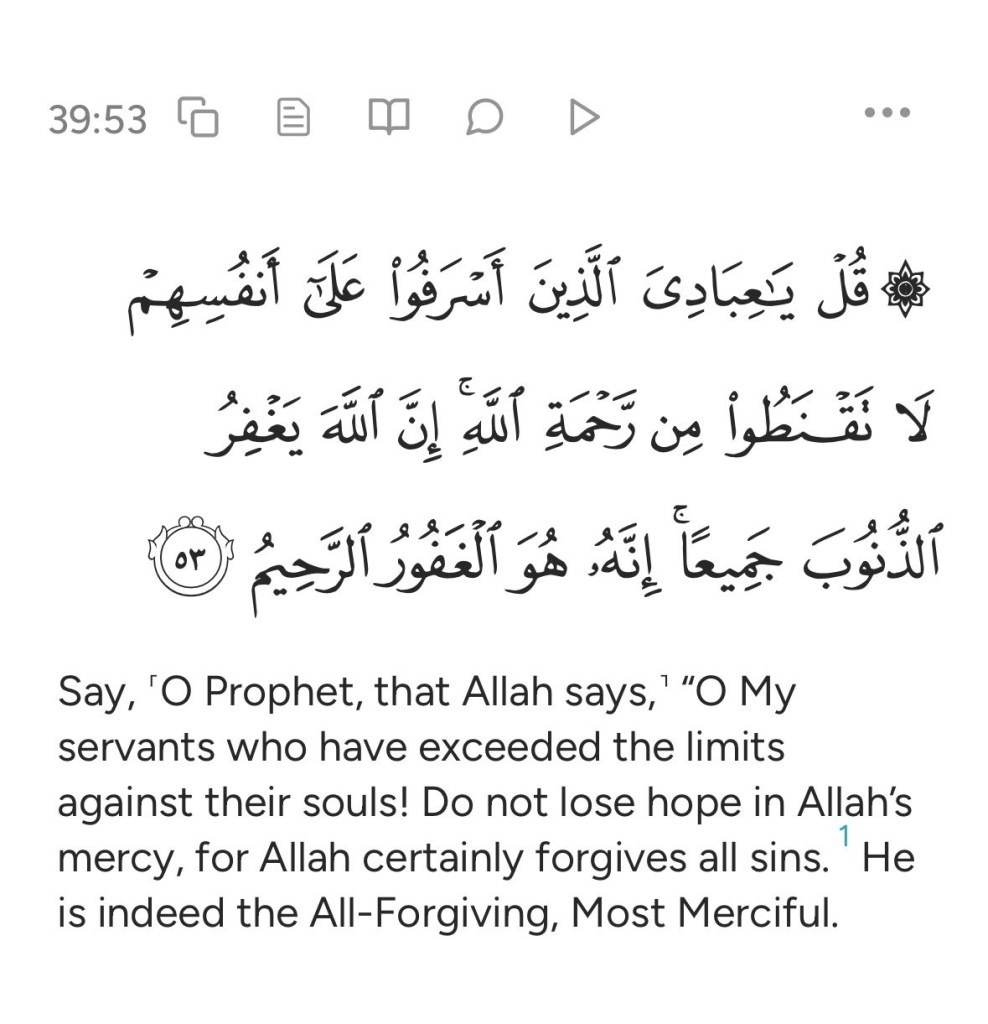
Timely repentance:

  • This X post counters a viral critique of Islam by author Dan Burmawy, who contrasts Allah’s perceived fear-based demands with the Bible’s loving God, by asserting Islam’s emphasis on divine forgiveness and protection for repentant sinners.(
  • Islam presents a god who is not for you but against you. He demands loyalty, submission, and sacrifice, but offers no love, no relationship, no assurance.
    You must fight for him, die for him, and never question him. And if you do? He brands you:
    Oppressors, losers, sinners, wicked, disbelievers, fools, ignorant, criminals, eternally damned, severe punishment awaits you, blind.
    You have no idea how many times these words are repeated in the Quran.
    This is the highest spiritual authority in Islam, a tyrant, a dictator, a ruler who governs by fear, threats, and punishment.
    And when God Himself is a bigot and a despot, is it any surprise that Islamic nations reflect that same oppressive, cynical, and authoritarian structure in their societies?
    The relationship with god in Islam is transactional at best and brutally conditional at worst.
    Muslims are raised in an atmosphere of constant doubt and fear, never certain of god’s approval, always questioned, always tested.
    It breeds a culture that is self-centered, paranoid, and transactional, where people are simply trying to survive under a system designed to crush them.
    But look at Christianity and Judaism. The God of the Bible is for us, a Father, a protector, a source of hope. “If God is for us, who can be against us?” (Romans 8:31).
    “Oh Lord, You are our Father.” (Isaiah 64:8).
    Our Father in Heaven, not a tyrant ruling by fear, but a loving Father who walks with His people.
    The difference is night and day. One God seeks submission through terror. The other offers love through grace.
    One God demands blood and loyalty. The other offers redemption and peace. One system chains its followers in fear. The other sets them free.)
  • It cites a Hadith from Sahih Muslim stating Allah prefers forgiving repentant sinners over sinless but arrogant individuals, underscoring a theology of mercy rather than mere transaction.
  • The reference to Pharaoh’s rejected repentance (Quran 10:90-92) illustrates Islam’s boundary on shirk—associating partners with God—as unforgivable without prior sincere turning, aligning with traditional interpretations that prioritize timely faith over deathbed pleas.

MAJOR SINS MENTIONED IN QURAN

 FORONECREATOR LEAVE A COMMENT

General Verses on Major Sins

The Quran distinguishes between major sins (kaba’ir) and minor sins, promising forgiveness for avoiding the former. For example:

  • “If you avoid the major sins which you are forbidden, We will remove from you your lesser sins and admit you to a noble entrance [i.e., Paradise].” (Quran 4:31) 1
  • “Those who avoid the major sins and immoralities, except the small faults – indeed, your Lord is vast in forgiveness…” (Quran 53:32) 6

Specific Major Sins and Associated Quranic Verses

Here are some of the major sins explicitly prohibited or highlighted in the Quran, along with relevant verses and their English translations. These are drawn from Islamic sources that compile such prohibitions. Note that the concept of “major sins” is often elaborated in Hadith, but the Quran provides the foundational warnings.

  1. Shirk (Associating Partners with Allah)
    This is considered the greatest sin, unforgivable if not repented from.
  • “Indeed, Allah does not forgive association with Him, but He forgives what is less than that for whom He wills. And he who associates others with Allah has certainly fabricated a tremendous sin.” (Quran 4:48) 12
  • “Verily, Allah forgives not (the sin of) setting up partners in worship with Him, but He forgives whom he pleases sins other than that.” (Quran 4:116) 11
  1. Murder (Killing a Soul Unjustly)
  • “…Whoever kills a soul unless for a soul or for corruption [done] in the land – it is as if he had slain mankind entirely. And whoever saves one – it is as if he had saved mankind entirely…” (Quran 5:32) 10
  • “But whoever kills a believer intentionally – his recompense is Hell, wherein he will abide eternally.” (Quran 4:93) 11
  1. Magic (Sihr/Sorcery)
  • “It was not Solomon who disbelieved, but the devils disbelieved, teaching people magic and that which was revealed to the two angels at Babylon, Harut and Marut. But the two angels do not teach anyone unless they say, ‘We are a trial, so do not disbelieve [by practicing magic].’ …And the people learn what harms them and does not benefit them. But the Children of Israel certainly knew that whoever purchased the magic would not have in the Hereafter any share.” (Quran 2:102) 11
  • “So when they threw, they bewitched the eyes of the people” (Quran 7:116) – This illustrates the deceptive nature of magic. 10
  1. Consuming Riba (Usury/Interest)
  • “Those who consume interest cannot stand [on the Day of Resurrection] except as one stands who is being beaten by Satan into insanity. That is because they say, ‘Trade is [just] like interest.’ But Allah has permitted trade and has forbidden interest.” (Quran 2:275) 10 12
  1. Consuming the Wealth of Orphans Unjustly
  • “Verily, those who unjustly eat up the property of orphans, they eat up only a fire into their bellies, and they will be burnt in the blazing Fire!” (Quran 4:10) 10 11
  • “And give to the orphans their properties and do not substitute the defective [of your own] for the good [of theirs]. And do not consume their properties into your own. Indeed, that is ever a great sin.” (Quran 4:2) 12
  1. Adultery (Zina)
  • “And come not near to the unlawful sexual intercourse. Verily, it is a Fahishah [i.e., anything that transgresses its limits (a great sin)], and an evil way (that leads one to Hell unless Allah forgives him).” (Quran 17:32) 11
  1. False Accusation of Adultery (Against Chaste Women)
  • “And those who accuse chaste women and then do not produce four witnesses – lash them with eighty lashes and do not accept from them testimony ever after. And those are the defiantly disobedient, Except for those who repent thereafter and reform, for indeed, Allah is Forgiving and Merciful.” (Quran 24:4-5) 10 11
  1. Fleeing from the Battlefield
  • “O you who have believed, when you meet those who disbelieve advancing [for battle], do not turn to them your backs [in flight]. And whoever turns his back to them on such a day…has certainly returned with anger [upon him] from Allah, and his refuge is Hell – and wretched is the destination.” (Quran 8:15-16) 10 11
  1. Theft
  • “[As for] the thief, the male and the female, amputate their hands in recompense for what they committed as a deterrent [punishment] from Allah. And Allah is Exalted in Might and Wise.” (Quran 5:38) 11
  1. Consuming Alcohol and Gambling
    • “O you who have believed, indeed, intoxicants, gambling, [sacrificing on] stone altars [to other than Allah], and divining arrows are but defilement from the work of Satan, so avoid it that you may be successful. Satan only wants to cause between you animosity and hatred through intoxicants and gambling and to avert you from the remembrance of Allah and from prayer. So will you desist?” (Quran 5:90-91) 11 12
  2. Disrespect to Parents
    • “And your Lord has decreed that you not worship except Him, and to parents, good treatment. Whether one or both of them reach old age [while] with you, say not to them [so much as], ‘uff,’ and do not repel them but speak to them a noble word.” (Quran 17:23) 11
  3. Severing Ties of Kinship
    • “Would you then, if you were given the authority, do mischief in the land, and sever your ties of kinship? Such are they whom Allah has cursed, so that He has made them deaf and blinded their sight.” (Quran 47:22-23) 11

These represent key examples; the full list of major sins in Islamic tradition often expands to 70 or more based on Hadith interpretations, but the above are directly rooted in Quranic prohibitions. Translations are approximate and can vary slightly by interpreter. For deeper study, consult reliable tafsir (exegeses) like those on Quran.com. 1

Crimes with statistics:

Infants, children abuse

Child sexual abuse material (CSAM) and exploitation form a massive global issue, with an estimated 302 million children—about 1 in 8 worldwide—having experienced sexual violence in childhood, including online and offline forms. 0 Technology-facilitated abuse affects roughly 300 million children annually. 21 Reports to organizations like the National Center for Missing & Exploited Children (NCMEC) reached over 36 million suspected CSAM incidents in 2023 alone, up from previous years. 2 In the U.S., more than 550,000 children are confirmed victims of abuse and neglect annually, with sexual abuse comprising a significant portion. 19 Globally, up to 20% of children in regions like Eastern and Southern Africa and Southeast Asia face sexual exploitation and abuse. 13

Ages of Victims

Victims span from infancy to adolescence, but data shows a heavy concentration among younger children. In CSAM reports, prepubescent children (typically under 12) are the most commonly depicted, often due to how content is categorized—focusing on the youngest in multi-victim files. 21 Infants and toddlers appear frequently, with global proportions highest in those age groups. 21 Surveys indicate lifetime prevalence of rape or sexual assault before age 18 at around 12.5% in South Asia (affecting ~54 million children in countries like India, Nepal, and Sri Lanka) and 6.7% in Western Europe (~5 million children). 21 In the U.S., about 1.6% of children aged 12-17 have been victims of rape or sexual assault. 15 Females generally face higher rates, but males report more exposure to unwanted sexual content online. 21 Familial abuse is common, with perpetrators often being parents or relatives—e.g., fathers linked to 37-38% of CSAM images. 21

Industry Statistics and Organized Crime

The CSAM industry generates billions of dollars annually, with individual files or livestreams selling for as much as $1,200 or as little as 27 pence. 20 Older estimates peg the global market at around $20 billion, though current figures suggest it’s multibillion-scale due to the rise in AI-generated content (up 1,325% from 2023-2024) and self-generated material (now 65% of reported content). 20 21 Profits flow through cryptocurrencies, dark web platforms, and even legitimate financial systems, benefiting offenders, tech companies (via ad revenue or hosting), payment processors, and cybersecurity firms that charge victims thousands for reputation management. 20

Organized crime plays a growing role, with offenses becoming more sophisticated and transnational. 14 In hotspots like the Philippines, large syndicates have shifted to smaller, family-based networks using digital tools for livestreaming and extortion. 20 The UN Office on Drugs and Crime notes that children make up about 30% of detected trafficking victims, often linked to sexual exploitation by organized groups. 8 18 High CSAM hosting in countries like the Netherlands (60% of Western Europe’s) and India points to commercial decisions by tech firms enabling this, including end-to-end encryption without safeguards. 21 Interpol and Europol operations have identified hundreds of victims and dismantled networks, with over 2.5 million CSAM reports processed in 2024. 21 3

Allegations of Elite Involvement

High-profile cases often involve wealthy or influential individuals accused of exploiting minors, though many claims remain allegations or have been settled without admissions of guilt. Jeffrey Epstein, a financier, was convicted in 2008 for procuring a minor for prostitution and faced further charges in 2019 for sex trafficking minors before his death. 22 24 His associate Ghislaine Maxwell was convicted in 2021 for recruiting and grooming underage girls for Epstein’s abuse network, which allegedly spanned decades and involved trafficking for sexual purposes. 25 29 Unsealed court documents from a 2015 defamation lawsuit by victim Virginia Giuffre named associates like Prince Andrew (who settled a related civil suit in 2022 without admitting wrongdoing), Bill Clinton (mentioned in travel logs but not accused of abuse), and others in Epstein’s circle, though many were not implicated in crimes. 23 22

In Hollywood, figures like Harvey Weinstein faced accusations of sexual misconduct, including with minors in some claims, though his convictions focused on adult victims. 27 Epstein documents referenced celebrities such as Leonardo DiCaprio, Cate Blanchett, and Cameron Diaz in witness testimony, but only as social contacts—no abuse involvement was alleged. 30 Other cases include a former gymnastics coach at an elite academy arrested in 2025 for abusing young athletes, 6 and broader scandals in entertainment where child actors have reported exploitation by industry insiders. 9 Claims of widespread “elite” networks, like those in debunked Satanic panic theories from the 1980s-90s, involved over 12,000 unsubstantiated allegations of ritual abuse but lacked evidence. 2 Political figures have been embroiled in cover-ups of institutional abuse in some high-profile U.K. cases from the 2010s. 26

Allahs displeasure on pple saying HE begotten a son

One of the most vivid Quranic passages expressing strong divine disapproval—often interpreted as anger or outrage—toward the idea of attributing a son to God (Allah) is found in Surah Maryam (Chapter 19), verses 88-93. Here’s the English translation:

“They say: ‘The Most Merciful has taken [for Himself] a son.’ You have done an atrocious thing. The heavens almost rupture therefrom and the earth splits open and the mountains collapse in devastation—that they attribute to the Most Merciful a son.

And it is not appropriate for the Most Merciful that He should take a son. There is no one in the heavens and earth but that he comes to the Most Merciful as a servant.”

This passage dramatically illustrates the severity of the claim, portraying the cosmos itself on the verge of destruction in response to such an attribution, emphasizing God’s transcendence and unity. 10

Another relevant verse expressing condemnation is Surah At-Tawbah (Chapter 9), verse 30:

The Jews say, ‘Ezra is the son of Allah’; and the Christians say, ‘The Messiah is the son of Allah.’ That is their statement from their mouths; they imitate the saying of those who disbelieved before them. May Allah destroy them; how are they deluded?”

This includes a direct curse, highlighting divine rejection of the notion. 0

Major sins mentioned in Quran

General Verses on Major Sins

The Quran distinguishes between major sins (kaba’ir) and minor sins, promising forgiveness for avoiding the former. For example:

  • “If you avoid the major sins which you are forbidden, We will remove from you your lesser sins and admit you to a noble entrance [i.e., Paradise].” (Quran 4:31) 1
  • “Those who avoid the major sins and immoralities, except the small faults – indeed, your Lord is vast in forgiveness…” (Quran 53:32) 6

Specific Major Sins and Associated Quranic Verses

Here are some of the major sins explicitly prohibited or highlighted in the Quran, along with relevant verses and their English translations. These are drawn from Islamic sources that compile such prohibitions. Note that the concept of “major sins” is often elaborated in Hadith, but the Quran provides the foundational warnings.

  1. Shirk (Associating Partners with Allah)
    This is considered the greatest sin, unforgivable if not repented from.
  • “Indeed, Allah does not forgive association with Him, but He forgives what is less than that for whom He wills. And he who associates others with Allah has certainly fabricated a tremendous sin.” (Quran 4:48) 12
  • “Verily, Allah forgives not (the sin of) setting up partners in worship with Him, but He forgives whom he pleases sins other than that.” (Quran 4:116) 11
  1. Murder (Killing a Soul Unjustly)
  • “…Whoever kills a soul unless for a soul or for corruption [done] in the land – it is as if he had slain mankind entirely. And whoever saves one – it is as if he had saved mankind entirely…” (Quran 5:32) 10
  • “But whoever kills a believer intentionally – his recompense is Hell, wherein he will abide eternally.” (Quran 4:93) 11
  1. Magic (Sihr/Sorcery)
  • “It was not Solomon who disbelieved, but the devils disbelieved, teaching people magic and that which was revealed to the two angels at Babylon, Harut and Marut. But the two angels do not teach anyone unless they say, ‘We are a trial, so do not disbelieve [by practicing magic].’ …And the people learn what harms them and does not benefit them. But the Children of Israel certainly knew that whoever purchased the magic would not have in the Hereafter any share.” (Quran 2:102) 11
  • “So when they threw, they bewitched the eyes of the people” (Quran 7:116) – This illustrates the deceptive nature of magic. 10
  1. Consuming Riba (Usury/Interest)
  • “Those who consume interest cannot stand [on the Day of Resurrection] except as one stands who is being beaten by Satan into insanity. That is because they say, ‘Trade is [just] like interest.’ But Allah has permitted trade and has forbidden interest.” (Quran 2:275) 10 12
  1. Consuming the Wealth of Orphans Unjustly
  • “Verily, those who unjustly eat up the property of orphans, they eat up only a fire into their bellies, and they will be burnt in the blazing Fire!” (Quran 4:10) 10 11
  • “And give to the orphans their properties and do not substitute the defective [of your own] for the good [of theirs]. And do not consume their properties into your own. Indeed, that is ever a great sin.” (Quran 4:2) 12
  1. Adultery (Zina)
  • “And come not near to the unlawful sexual intercourse. Verily, it is a Fahishah [i.e., anything that transgresses its limits (a great sin)], and an evil way (that leads one to Hell unless Allah forgives him).” (Quran 17:32) 11
  1. False Accusation of Adultery (Against Chaste Women)
  • “And those who accuse chaste women and then do not produce four witnesses – lash them with eighty lashes and do not accept from them testimony ever after. And those are the defiantly disobedient, Except for those who repent thereafter and reform, for indeed, Allah is Forgiving and Merciful.” (Quran 24:4-5) 10 11
  1. Fleeing from the Battlefield
  • “O you who have believed, when you meet those who disbelieve advancing [for battle], do not turn to them your backs [in flight]. And whoever turns his back to them on such a day…has certainly returned with anger [upon him] from Allah, and his refuge is Hell – and wretched is the destination.” (Quran 8:15-16) 10 11
  1. Theft
  • “[As for] the thief, the male and the female, amputate their hands in recompense for what they committed as a deterrent [punishment] from Allah. And Allah is Exalted in Might and Wise.” (Quran 5:38) 11
  1. Consuming Alcohol and Gambling
    • “O you who have believed, indeed, intoxicants, gambling, [sacrificing on] stone altars [to other than Allah], and divining arrows are but defilement from the work of Satan, so avoid it that you may be successful. Satan only wants to cause between you animosity and hatred through intoxicants and gambling and to avert you from the remembrance of Allah and from prayer. So will you desist?” (Quran 5:90-91) 11 12
  2. Disrespect to Parents
    • “And your Lord has decreed that you not worship except Him, and to parents, good treatment. Whether one or both of them reach old age [while] with you, say not to them [so much as], ‘uff,’ and do not repel them but speak to them a noble word.” (Quran 17:23) 11
  3. Severing Ties of Kinship
    • “Would you then, if you were given the authority, do mischief in the land, and sever your ties of kinship? Such are they whom Allah has cursed, so that He has made them deaf and blinded their sight.” (Quran 47:22-23) 11

These represent key examples; the full list of major sins in Islamic tradition often expands to 70 or more based on Hadith interpretations, but the above are directly rooted in Quranic prohibitions. Translations are approximate and can vary slightly by interpreter. For deeper study, consult reliable tafsir (exegeses) like those on Quran.com. 1