This X post counters a viral critique of Islam by author Dan Burmawy, who contrasts Allah’s perceived fear-based demands with the Bible’s loving God, by asserting Islam’s emphasis on divine forgiveness and protection for repentant sinners.(
Islam presents a god who is not for you but against you. He demands loyalty, submission, and sacrifice, but offers no love, no relationship, no assurance. You must fight for him, die for him, and never question him. And if you do? He brands you: Oppressors, losers, sinners, wicked, disbelievers, fools, ignorant, criminals, eternally damned, severe punishment awaits you, blind. You have no idea how many times these words are repeated in the Quran. This is the highest spiritual authority in Islam, a tyrant, a dictator, a ruler who governs by fear, threats, and punishment. And when God Himself is a bigot and a despot, is it any surprise that Islamic nations reflect that same oppressive, cynical, and authoritarian structure in their societies? The relationship with god in Islam is transactional at best and brutally conditional at worst. Muslims are raised in an atmosphere of constant doubt and fear, never certain of god’s approval, always questioned, always tested. It breeds a culture that is self-centered, paranoid, and transactional, where people are simply trying to survive under a system designed to crush them. But look at Christianity and Judaism. The God of the Bible is for us, a Father, a protector, a source of hope. “If God is for us, who can be against us?” (Romans 8:31). “Oh Lord, You are our Father.” (Isaiah 64:8). Our Father in Heaven, not a tyrant ruling by fear, but a loving Father who walks with His people. The difference is night and day. One God seeks submission through terror. The other offers love through grace. One God demands blood and loyalty. The other offers redemption and peace. One system chains its followers in fear. The other sets them free.)
It cites a Hadith from Sahih Muslim stating Allah prefers forgiving repentant sinners over sinless but arrogant individuals, underscoring a theology of mercy rather than mere transaction.
The reference to Pharaoh’s rejected repentance (Quran 10:90-92) illustrates Islam’s boundary on shirk—associating partners with God—as unforgivable without prior sincere turning, aligning with traditional interpretations that prioritize timely faith over deathbed pleas.

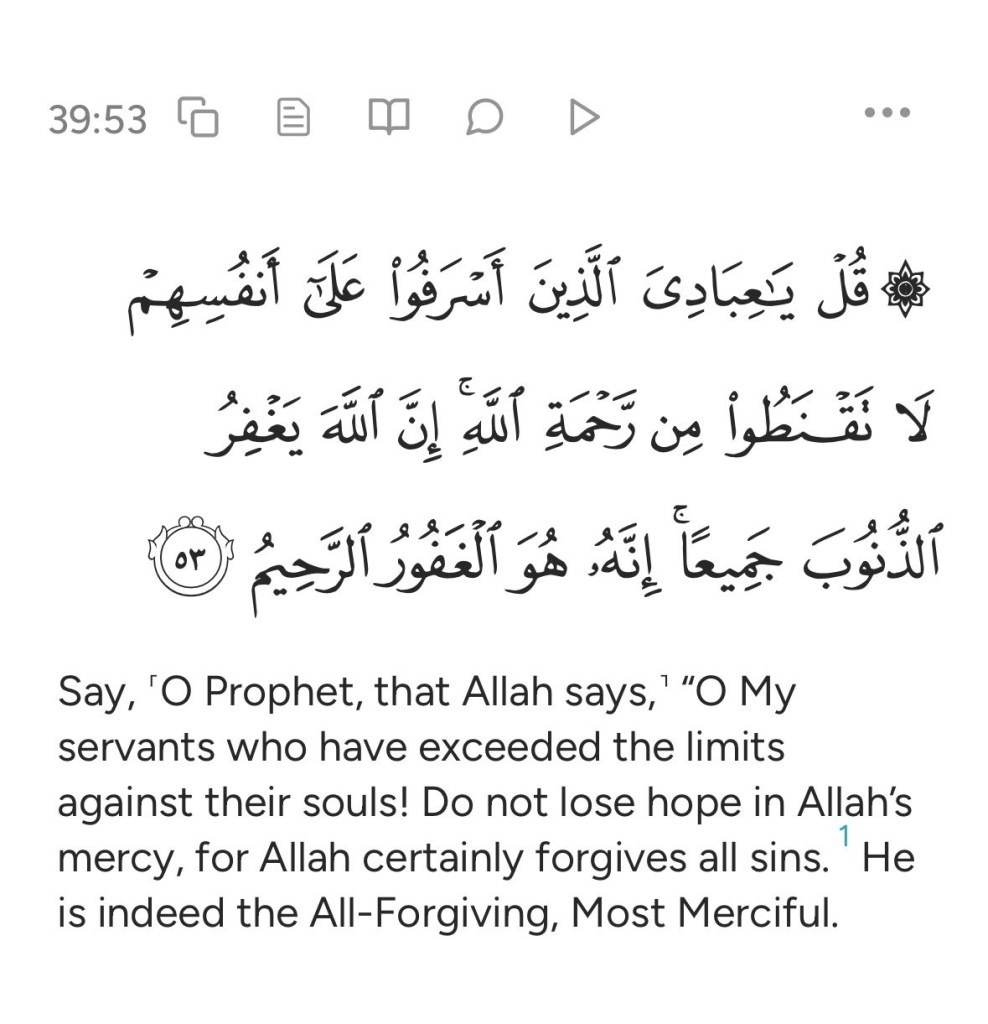
 Messages from Quran