
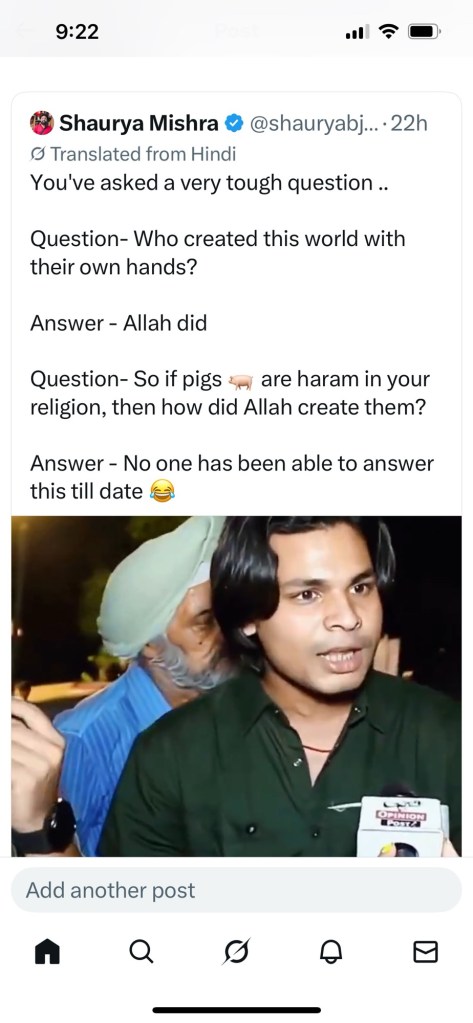
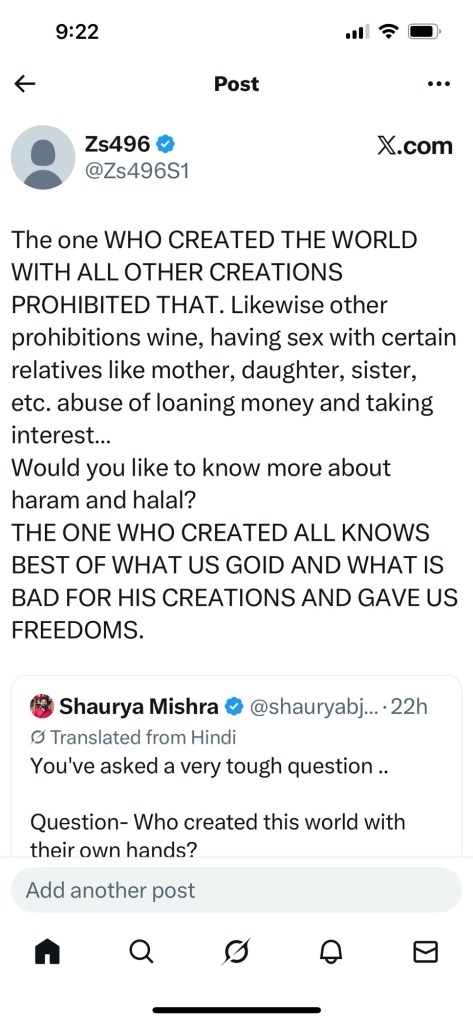
- This X post quotes a viral Hindi video mocking Islam by posing a riddle about why Allah created pigs if they are haram, featuring street interviews with non-Muslims highlighting perceived inconsistencies in dietary laws.
- The author defends Islamic prohibitions, arguing that the creator deems certain creations—like pork, alcohol, incest, and usury—harmful for humans, emphasizing divine wisdom in granting freedoms while guiding toward beneficial choices.
- Islamic scholarship, including Qur’anic verses (e.g., Surah Al-Baqarah 2:173), explicitly deems pork impure and forbidden, with studies like those in the Journal of Animal Science noting health risks such as high cholesterol, parasites, and toxins in pork to support the rationale.
Definitions of Halal and Haram
In Islam, halal (حلال) is an Arabic term meaning “permissible” or “lawful.” It refers to actions, behaviors, foods, or things that are allowed according to Islamic law (Sharia), as derived from the Quran and the Sunnah (teachings and practices of the Prophet Muhammad, peace be upon him). Performing halal acts can bring reward if done with the intention of obeying Allah, but there is no sin in abstaining from them unless they are obligatory. 10 Conversely, haram (حرام) means “forbidden” or “unlawful.” It denotes actions or things strictly prohibited by Allah, where engaging in them may incur sin, punishment in the hereafter, and potentially legal penalties in this life under Islamic governance. Abstaining from haram acts out of obedience to Allah earns reward. 10
These concepts are central to Muslim life, guiding daily decisions in areas like diet, finance, social interactions, and worship. The determination of halal and haram is exclusively Allah’s prerogative—no human, ruler, or scholar can alter it without basis in divine revelation. 10 The Quran emphasizes this in verses like Surah al-An’am (6:153), which calls for following Allah’s straight path without deviation, and Surah al-Shura (42:21), condemning those who invent unauthorized religious rules. 10
Core Principles Governing Halal and Haram
Islamic jurisprudence (fiqh) outlines several foundational principles for distinguishing halal from haram, ensuring the religion promotes ease, mercy, and benefit for humanity. 11
- Default Permissibility: Everything in creation is halal by default unless explicitly forbidden by the Quran or authentic Sunnah. This principle stems from Allah’s mercy, as the Quran states: “And He has subjected to you what is in the Heavens and what is in the Earth, all together from Him” (45:13). The Prophet Muhammad (peace be upon him) reinforced this by saying the lawful is what Allah has made lawful in His Book, the unlawful is what He has forbidden, and what is unmentioned is a mercy to be accepted. 11 Thus, the scope of haram is relatively narrow compared to halal.
- Exclusive Divine Legislation: Only Allah can declare something halal or haram. Humans, including scholars, interpret and clarify based on revelation but cannot invent prohibitions or permissions. Forbidding what Allah has permitted or vice versa is akin to shirk (associating partners with Allah), as criticized in the Quran (e.g., 42:21 and 9:31 regarding rabbis and monks who overstepped). 11
- Association with Benefit and Harm: Haram is tied to things that are inherently harmful or bad for individuals and society, while halal promotes what is good and beneficial. Allah, in His wisdom and mercy, forbids detrimental elements (e.g., Quran 2:219 on wine and gambling, where sin exceeds benefit) and permits wholesome alternatives. Prohibitions on the Jewish people were sometimes punitive (4:160), but Islam eases such burdens (7:157). 11
- Alternatives Provided: For every haram item or action, Islam offers superior halal substitutes. For instance, usury (riba) is forbidden, but ethical trade and business are encouraged; adultery is haram, but marriage is promoted. 11
- Paths to Haram Are Also Forbidden: Anything that leads to haram is itself haram, such as provocative media or unrestricted mixing of genders that could lead to adultery. All participants in haram acts share responsibility (e.g., producers, sellers, and consumers of alcohol). 11
- No Justification Through Intentions or Tricks: Good intentions do not make haram means permissible—both ends and methods must be halal. Renaming or using loopholes to bypass prohibitions (e.g., disguising usury as a “service fee”) is invalid. The Prophet warned against such practices, likening them to the Jews’ evasions. 11
- Avoidance of Doubtful Matters (Mushtabahat): Matters unclear between halal and haram should be avoided to safeguard one’s faith, as per the hadith: “What is halal is clear and what is haram is clear. Midway between them are things which many people do not know… He who approaches them will be very near to haram.” 11
- Universal Application: Haram applies equally to all Muslims, regardless of status—no exemptions for rulers or the elite. For example, theft warrants punishment even if committed by the Prophet’s daughter Fatima (hypothetically). 11
- Necessity as an Exception: In extreme duress (e.g., starvation), haram may be temporarily permitted in minimal amounts, without desire or excess, as the Quran allows (2:173). This reflects Islam’s emphasis on ease: “Allah desires ease for you, and desires not hardship for you” (2:185). 11
Levels of Halal and Haram
Islamic rulings extend beyond a simple halal-haram binary, encompassing nuanced categories in fiqh to guide behavior with precision. 9 These are often divided into four levels for halal (permissible spectrum) and two for haram (forbidden degrees), helping Muslims prioritize actions for spiritual growth.
Four Levels of Halal
- Fard (Obligatory/Compulsory): Actions commanded by Allah, where neglecting them incurs sin, but fulfilling them earns reward. Examples: Performing the five daily prayers (salah), fasting during Ramadan, paying zakat (charity), and undertaking Hajj if financially able. These are backed by direct Quranic commands or hadiths warning of punishment for omission. 9
- Mustahab (Recommended/Encouraged): Acts the Prophet consistently did or encouraged, bringing reward if performed but no sin if omitted. Examples: Extra (Sunnah) prayers, reciting “Bismillah” before eating, visiting the sick, and voluntary fasting on Mondays/Thursdays. These build upon fard acts and foster hypocrisy if abandoned while claiming devotion to Allah. 9
- Mubah (Neutral/Permissible): Actions neither rewarded nor punished, allowing personal choice. Examples: Choosing clothing styles (within modesty rules), eating at a table versus on the floor, or pursuing hobbies. Issues arise when cultural biases elevate these to obligatory or forbidden status without evidence. 9
- Makruh (Disliked/Detestable): Actions discouraged but not sinful unless habitual or intentional. Avoiding them earns reward. Examples: Eating garlic before mosque attendance (due to odor), praying while suppressing the urge to use the restroom, or wasting water in ablution (wudu). If repeated excessively, they may border on haram. 9
Two Levels of Haram
- Major Sins (Kabair): Severe prohibitions with grave consequences, often including prescribed punishments. Examples: Shirk (polytheism), murder, theft, usury (riba), and adultery/fornication (zina). Repentance requires sincere remorse, increased worship, and restitution (e.g., returning stolen items). 9
- Minor Sins (Sagha’ir): Lesser wrongs forgivable through good deeds, prayer, ablution, or supplications. However, persistence without repentance can escalate them to major sins, especially if done proudly. Examples include minor gossip or impatience, which can be erased by acts like saying “Subhanallah.” 9
Examples Across Different Aspects of Life
- Food and Drink: Halal includes wholesome, permissible items like fruits, vegetables, and properly slaughtered meat (e.g., Quran 5:4 on good food). Haram encompasses pork, blood, carrion, and intoxicants like alcohol (Quran 5:90-91). Alternatives: Healthy beverages instead of wine. Urinating in public spaces or shade is haram due to health risks. 11
- Finance and Business: Halal involves ethical trade, profit-sharing, and charity. Haram includes riba (interest-based loans), gambling, and fraud. Substitutes: Interest-free financing or contests with prizes. 11
- Actions and Behavior: Halal actions promote justice, like honesty and kindness. Haram includes theft (universal punishment), adultery, and its precursors (e.g., immodest dress or explicit media). Marriage is the halal alternative to illicit relations. 11
- Daily Life and Worship: Halal worship follows prescribed methods; inventing rituals is haram (e.g., unauthorized taboos on animals, Quran 5:104). Borderline matters like excessive socializing should be avoided to prevent sin. 11
In essence, halal and haram form a balanced framework for a righteous life, emphasizing mercy, accountability, and human well-being while drawing Muslims closer to Allah.
 Messages from Quran